Your Positioning Strategy - How to Own Your Space
Part of Playbook 5 of 9: Your Competitive Position - Why You Win Against Everyone Else

By the end of this chapter, you'll have actionable steps and a clear framework to move forward — no matter where you're starting from.
Your positioning statement is the single most important piece of messaging you'll create. It tells the world — in one sentence — exactly who you help, what problem you solve, and what outcome you deliver.
In Playbook 1, Chapter 3, you developed your core positioning statement using a proven formula. If you haven't completed that exercise yet, go back and do it now — it's the foundation for everything in this chapter.
Refining Your Positioning for Competitive Advantage
Now it's time to sharpen your positioning for the competitive landscape. The positioning statement you created in Playbook 1 tells people what you do. Your competitive positioning tells them why you're the best choice.
Refine your statement by adding a "because" clause that highlights your insider advantage:
Examples:
"I help government contractors who are struggling with compliance to avoid fines and focus on growth without hiring expensive consultants, because I spent 15 years navigating federal regulations from the inside and I know exactly what matters."
"I help healthcare startups who are struggling with HIPAA readiness to achieve compliance in 90 days without derailing their product timeline, because I've managed 47 compliance audits and I know the shortcuts that actually work."
"I help mid-size manufacturers who are struggling with supply chain disruptions to hit delivery targets consistently without expensive inventory buffers, because I ran supply chain operations for 14 years and I know which optimizations actually move the needle."
Notice the pattern: the "because" clause is specific, experience-based, and impossible for a generic competitor to replicate. This is your insider advantage in action.
The Positioning Test
A great competitive positioning statement passes three tests:
- The Specificity Test: Could a generic consultant make this exact same claim? If yes, it's not specific enough. Add more insider detail.
- The Proof Test: Can you back up every claim with a real example from your career? If not, revise until you can.
- The Clarity Test: Can someone who doesn't know your industry understand the value you're offering? If not, simplify.
Your Positioning Strategy Toolkit
With your refined positioning in hand, here's how to deploy it across different contexts:
The 10-Second Version (Networking)
"I help [who] [do what], because [your advantage]."
Use at networking events, casual conversations, and when someone asks "What do you do?"
The 30-Second Version (Prospect Conversations)
Your full competitive positioning statement including the problem, outcome, fear, and "because" clause.
Use in initial outreach, discovery calls, and introductory emails.
The 2-Minute Version (Sales Meetings)
Your positioning statement + one specific example that proves it.
"I help [who] [do what], because [advantage]. For example, I recently worked with [client type] who was [specific problem], and within [timeframe], we [specific result]."
The Written Version (Website, LinkedIn, Proposals)
Your positioning statement expanded into a short paragraph that includes social proof, specific outcomes, and a clear next step.
Positioning Against Each Competitor Type
Use the Competitor Gap Analysis from Chapter 1 to tailor your positioning for each competitor type:
Against Generic Consultants: Emphasize speed and insider knowledge. "While a large firm needs months to understand your industry, I've lived it for [X years]. I can start delivering value in week one."
Against Software/Automation: Emphasize judgment and context. "Tools can process data, but they can't tell you what it means for YOUR specific situation. I bring [X years] of pattern recognition that no algorithm can replicate."
Against Internal DIY: Emphasize focus and expertise. "Your team is talented, but this isn't their specialty — it's mine. I've solved this exact problem [X times] and I can do it in a fraction of the time."
Exercise: Build Your Competitive Positioning
-
Write your refined positioning statement with the "because" clause:
"I help _ who are struggling with _ to _ without _, because ____." -
Create your 10-second, 30-second, and 2-minute versions.
-
Write one positioning statement tailored to each competitor type (Generic Consultants, Software/Automation, Internal DIY).
-
Test your positioning with someone in your target market. Ask them: "Does this make you want to learn more?" If the answer isn't an enthusiastic yes, revise.
Practical Exercises
Write your refined positioning statement with the 'because' clause that highlights your insider advantage. Then create your 10-second, 30-second, and 2-minute versions for different contexts.
Write one positioning statement tailored to each competitor type: Generic Consultants/Agencies, Software/Automation Tools, and Internal DIY/Status Quo.
Key Takeaways
- Add a 'because' clause to your positioning statement that highlights your insider advantage
- Test your positioning with three criteria: Specificity, Proof, and Clarity
- Create multiple versions (10-second, 30-second, 2-minute) for different contexts
- Tailor your positioning message to each competitor type for maximum impact
LeanPivot AI Tools
AI-powered tools to help you execute this stage faster.
PRD Generator
Create product requirements documents with AI.
Feature Prioritization
Prioritize features using RICE framework.
Tech Stack Advisor
Choose the right technologies for your MVP.
User Story Generator
Write effective user stories for your backlog.
Usability Testing Script
Plan effective usability tests.
MVP Cost Forecaster
Estimate MVP development costs.
Recommended External Tools
Third-party tools that complement this stage of your journey.
Recommended Reading
Essential books for the Mvp stage.

Running Lean: Iterate from Plan A to a Plan That Works
Ash Maurya's practical guide to Lean Canvas and continuous innovation.
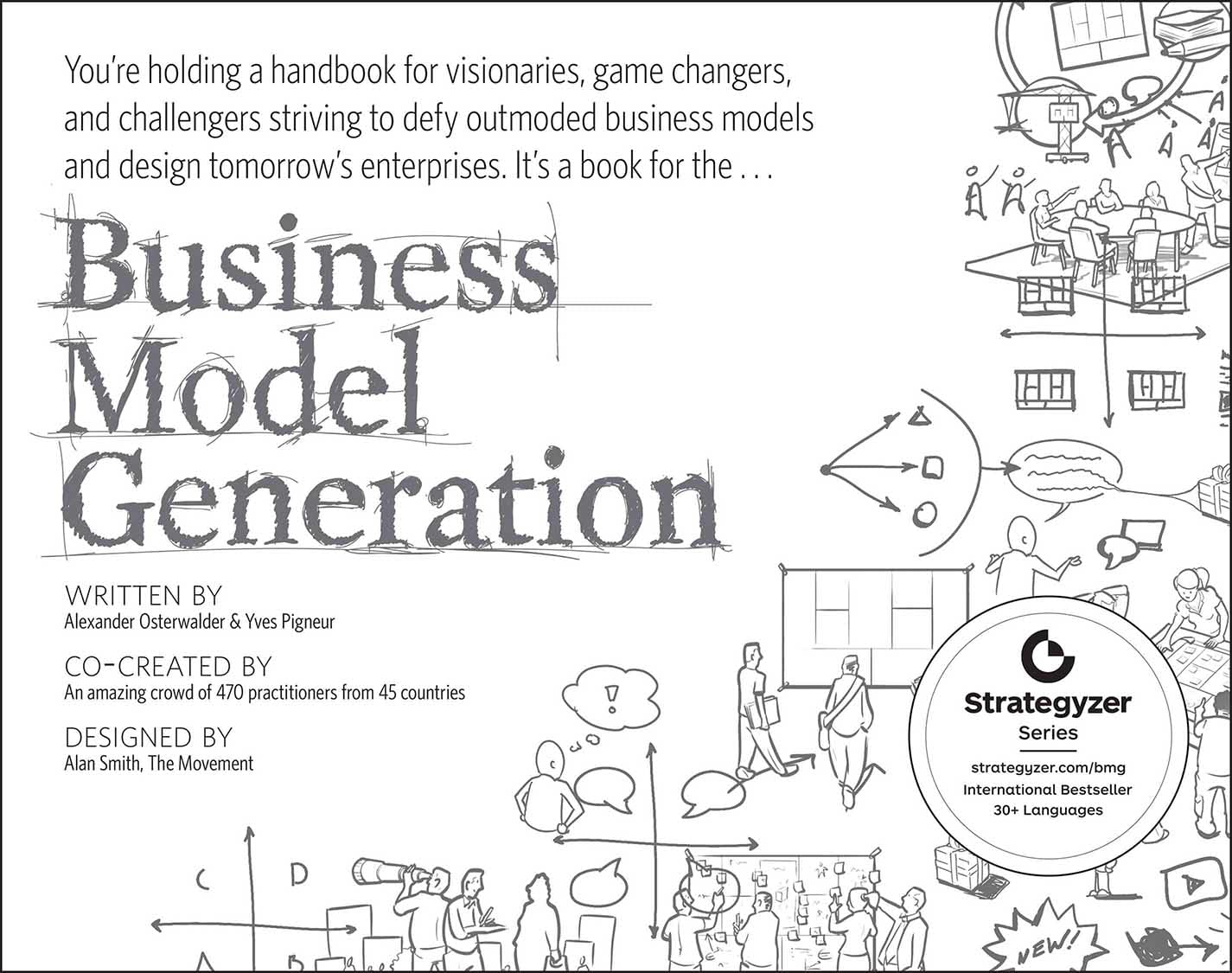
Business Model Generation: A Handbook for Visionaries, Game Changers, and Challengers
Business Model Generation is a handbook for visionaries, game changers, and challengers striving to defy outmoded business models and design tomorrow's enterprises. By Alex Osterwalder & Yves Pigneur.

Traction: How Any Startup Can Achieve Explosive Growth
Gabriel Weinberg's playbook for getting customers. 19 traction channels explained.

The Mom Test: How to Talk to Customers & Learn if Your Business is a Good Idea
How to Talk to Customers & Learn if Your Business is a Good Idea by Rob Fitzpatrick.
Tools & Resources
Software and services to accelerate your Mvp stage.
 tools
tools
Emergent.sh
Chat interface design tool for frontend and backend development. Coupon code: ROVNRMMG for 5% off on all payments
 tools
tools
Lovable.dev
AI-powered platform that builds full-stack web applications and websites from simple, natural language prompts.
 tools
tools
Qoder
Qoder is a next-generation AI-powered coding platform developed by Alibaba, designed to go beyond simple code completion and act as an agentic coding environment for real-world software development. Here’s what makes it unique:
 courses
Ikigai: The Japanese Secret to a Long and Happy Life Hardcover
Ikigai: The Japanese Secret to a Long and Happy Life explores the Japanese concept of ikigai—the overlap of what you love, what you're good at, what you can be paid for, and what the world needs—as the key to a happier and longer life.
 courses
The Power of Regret: How Looking Backward Moves Us Forward
The Power of Regret: How Looking Backward Moves Us Forward
 tools
tools
Auth0
Complete identity platform for secure authentication and authorization in your tech stack
Some links are affiliate links. We may earn a small commission at no extra cost to you.
Works Cited & Recommended Reading
Obviously Awesome
by April DunfordDunford's five-component positioning model (competitive alternatives, unique attributes, value, target customer, category) is the exact methodology behind the niche definition exercises.
PB4: Your Competitive Position — the definitive positioning framework.The Positioning Manual for Technical Firms
by David C. BakerBaker's insistence that you must be "the only" rather than "a better." Specialists earn 2–5× generalists.
PB4 & PB5: Competitive Position + Operations.Building a StoryBrand
by Donald MillerMiller's framework (customer is hero, you are guide) is why outreach scripts and positioning language lead with the client's problem rather than your credentials.
PB6: Launch Strategy — customer-first messaging.Ready to Start Your Launch Journey?
LeanPivot.ai has 85+ AI-powered tools to help you translate expertise into a real business.
Create Free Account