The Problem-Solution Fit - Making Sure People Actually Want What You're Offering
Part of Playbook 3 of 9: Translating Your Expertise - From Industry Knowledge to Business Value

By the end of this chapter, you'll have actionable steps and a clear framework to move forward — no matter where you're starting from.
Here is one of the most painful lessons in business: you can work incredibly hard building something you are proud of — and find out that nobody wants it.
The good news is that this is completely avoidable. You just have to validate before you build.
Validating means checking whether the problem you are trying to solve is real and serious enough for people to pay to fix it. The way you validate is simple: you talk to real potential customers before you commit to any solution.
Why This Step Matters So Much
When you have been deep inside an industry, it is easy to assume you know exactly what problems people have. And you probably do know — at a high level. But you might be wrong about which problem is urgent enough for someone to pay to fix right now. Or you might be right about the problem but wrong about how people want to solve it. Or you might be so focused on the problem you personally experienced that you miss the one that is actually costing your customers more.
Validation conversations close those gaps before you waste time and money.
Here is the trap that catches most displaced workers: you have lived through the problem from the inside. You felt the pain. You saw the inefficiency. So you assume everyone else feels it too. But your experience was shaped by your specific company, your specific role, and your specific context. The market might see the problem differently — or might prioritize a different problem entirely.
I have seen talented professionals spend months building elaborate consulting frameworks, creating beautiful slide decks, and designing comprehensive service packages — only to discover that the people they wanted to sell to did not actually care about the problem they were solving. Not because the problem was not real, but because it was not painful enough to justify spending money on.
That is the difference between a real problem and a painful problem. Real problems exist everywhere. Painful problems — the kind people pay to solve — are the ones that cost money, cause stress, create risk, or block growth right now.
Defining Your Customer Avatar First
Before you can validate anything, you need to know who you are validating with. This is your customer avatar — a specific, detailed description of the person or company that would buy your service.
A good customer avatar includes:
- Company size — How many employees? What is the revenue range? A 10-person startup has different problems than a 500-person mid-market company.
- Industry or vertical — What sector are they in? The more specific, the better. "Technology companies" is vague. "B2B SaaS companies in the healthcare space" is useful.
- Role of the buyer — Who actually makes the buying decision? Is it the CEO, the VP of Operations, the Head of HR? You need to talk to the decision-maker, not just someone who agrees the problem exists.
- Stage of growth — Are they early-stage and scrappy, or established and scaling? A company with 00K in revenue has different priorities than one with 0M.
- The trigger event — What recently happened or is about to happen that makes this problem urgent? Common triggers: new regulation, rapid growth, key person leaving, failed audit, investor pressure, competitive threat.
Write this avatar down. Make it specific enough that you could find this person on LinkedIn in five minutes. If you cannot, it is too vague.
Example Customer Avatars
For a displaced compliance professional:
VP of Operations at a healthcare SaaS company with 50–200 employees, recently received their first enterprise customer that requires SOC 2 compliance, and they have no idea how to get there.
For a displaced marketing director:
Founder or CEO of a direct-to-consumer e-commerce brand doing M–M in annual revenue, spending at least 0K/month on paid ads but not tracking attribution properly and unsure which channels are actually driving profitable sales.
For a displaced HR leader:
Head of People or CEO at a tech startup with 30–80 employees that is growing fast, experiencing higher-than-industry-average turnover, and has no formal performance review process.
See how specific those are? Each one tells you exactly who to look for, what problem they likely have, and why they might be motivated to solve it right now.
The Validation Conversation Script
For each business idea you are considering, have at least 5 conversations with people who match your customer avatar. Here is what to ask:
-
"Do you deal with [this specific problem]?" — Check if the problem exists for them. Do not lead them. Do not say "I bet you struggle with X, right?" Just ask the open question.
-
"How much of an issue is it? Can you give me a sense of the cost?" — Understand severity. You want to hear them quantify it. If they cannot put a number on it, the problem might not be painful enough to pay for.
-
"What have you tried to solve it?" — Understand their current approach. If they have tried nothing, be cautious. If they have tried multiple things, that is a strong signal that the pain is real.
-
"Why did that not fully solve it?" — Understand the gap. This is where you learn what your offering needs to do differently. Their frustration with existing solutions is your opportunity.
-
"If there was a way to reliably fix this, would you pay for it?" — Check willingness to pay. This is a critical question. Some people will happily complain about a problem but have no intention of spending money to fix it.
-
"What would you pay, roughly?" — Get a real number. This is uncomfortable to ask, but essential. Their answer tells you whether there is a viable business here. If they say "a couple hundred bucks," that is very different from "we would budget K–0K for the right solution."
What NOT to Do During Validation Conversations
- Do not pitch your solution. You are here to learn, not to sell. The moment you start describing your offering, you contaminate the data. They will start telling you what they think you want to hear instead of what they actually need.
- Do not argue with their answers. If someone says your problem is not a big deal to them, accept it. That is data.
- Do not ask leading questions. "Would not it be great if someone could handle your compliance for you?" is not a validation question. It is a sales pitch disguised as a question.
- Do not talk to friends and family who are not actual potential customers. Your cousin who thinks your idea is great but would never buy it is not a validation source.
- Do not count "that sounds interesting" as validation. Interest is polite. Money is real. The only validation that matters is someone who would actually pay.
Reading the Room: Green Flags and Red Flags
Green flags that tell you this is a real, payable problem:
- They brought up the problem before you asked about it
- They have already spent money trying to solve it
- They can describe the cost in specific terms ("it costs us about per year")
- They lean forward and engage deeply when you describe your potential solution
- They ask, "When can we get started?"
- They offer to introduce you to someone else who has the same problem
- They ask how much you charge before you even bring up pricing
- Their eyes light up when you describe the outcome — not polite interest, genuine excitement
Red flags that you need to reconsider:
- They agree the problem exists but do not seem frustrated or bothered by it
- They have never tried to solve it (suggests it is not really painful enough to act on)
- They say "that is interesting" but do not ask follow-up questions
- They cannot name what they would pay, or say "not much" or "as little as possible"
- They do not know anyone else with the same problem
- They keep changing the subject or checking their phone
- They say things like "maybe someday" or "when we have budget for that"
- They describe the problem as "nice to fix" rather than "need to fix"
Tracking Your Validation Data
Create a simple spreadsheet with these columns:
- Person name and company
- Date of conversation
- Problem confirmed? (yes/no)
- Severity (1–5 scale, based on their reaction)
- Current solution and why it is not working
- Willingness to pay? (yes/no/maybe)
- Price range they mentioned
- Would they refer you to others? (yes/no)
- Key quotes (write down their exact words — these become marketing copy later)
After 5–10 conversations, patterns will emerge. You will see which version of the problem resonates most, which customer profile is most responsive, and what price range the market expects.
The Pivot Point: What Your Data Tells You
The Simple Rule: If 4 out of 5 (or more) people express real frustration and willingness to pay, you have problem-solution fit. Move forward with confidence.
If fewer than that, you have three options — and none of them are failure:
Option 1: Refine the problem. Maybe you are describing the problem in a way that does not match how your customers experience it. Try rephrasing it. Instead of "compliance management," try "avoiding your first failed audit." Same underlying skill, but framed around a specific fear.
Option 2: Change the customer segment. Maybe the problem is real but you are talking to the wrong people. A VP at a Fortune 500 company might not care about the problem you are solving because they have a team for that. But the same problem at a 50-person company with no dedicated team? That is where the pain lives.
Option 3: Test a different offering entirely. Go back to your skills inventory from Chapter 1 and pick a different skill to validate. You have 10+ skills on that list. This is exactly why we built the inventory first — so you have options when your first idea does not land.
Real-World Validation Story
A displaced operations director wanted to build a consulting practice around supply chain optimization. She talked to 8 companies. The response was lukewarm — everyone agreed supply chain was important, but nobody was willing to pay for outside help.
Then she noticed something in her notes: 6 of the 8 people mentioned struggling with vendor management specifically. Not the whole supply chain — just the vendor relationship piece. They were spending hours chasing vendors for updates, dealing with quality issues, and renegotiating contracts.
She pivoted her offering to "vendor management as a service" — handling vendor relationships, contract negotiations, and performance monitoring. When she went back to those same 8 companies with this more specific offering, 5 said they would pay for it.
That is the power of validation conversations. She did not fail the first time — she collected the data that led her to the right offering.
Your Validation Action Plan
Here is your step-by-step plan for the next two weeks:
Days 1–2: Finalize your customer avatar and write out your 6 validation questions customized to your specific offering.
Days 3–4: Identify 10 people who match your avatar. Use LinkedIn, your email contacts, industry groups, or former colleagues. Reach out and schedule short conversations (15–20 minutes).
Days 5–10: Conduct your validation conversations. Aim for at least 5, but 8–10 is better. Take detailed notes immediately after each conversation.
Days 11–12: Review your data. Count your green flags and red flags. Look for patterns.
Days 13–14: Make your decision — move forward, refine, change segments, or test a different skill.
This is not academic. This is how real businesses are validated. Every week you spend validating now saves you months of building the wrong thing later.
Key Takeaways
- Validate before you build — talk to real potential customers before committing to any solution
- Use the 6-question validation script to test whether the problem is real and painful enough to pay for
- Green flags: they bring up the problem unprompted, they've spent money trying to solve it, they ask "when can we start?"
- 4 out of 5 positive responses = problem-solution fit; fewer than that = refine and test again
LeanPivot AI Tools
AI-powered tools to help you execute this stage faster.
Lean Interview Guide
Generate customer interview scripts with best practices.
Insight Survey Builder
Design effective customer surveys that get real insights.
Market Signal Tester
Create smoke tests to validate demand before building.
Resonance Scorecard
Test messaging effectiveness with target customers.
Problem-Solution Fit Analyzer
Validate that your solution addresses the real problem.
Pivot Compass
Guide pivot or persevere decisions with evidence.
Recommended External Tools
Third-party tools that complement this stage of your journey.
Recommended Reading
Essential books for the Validation stage.

Running Lean: Iterate from Plan A to a Plan That Works
Ash Maurya's practical guide to Lean Canvas and continuous innovation.
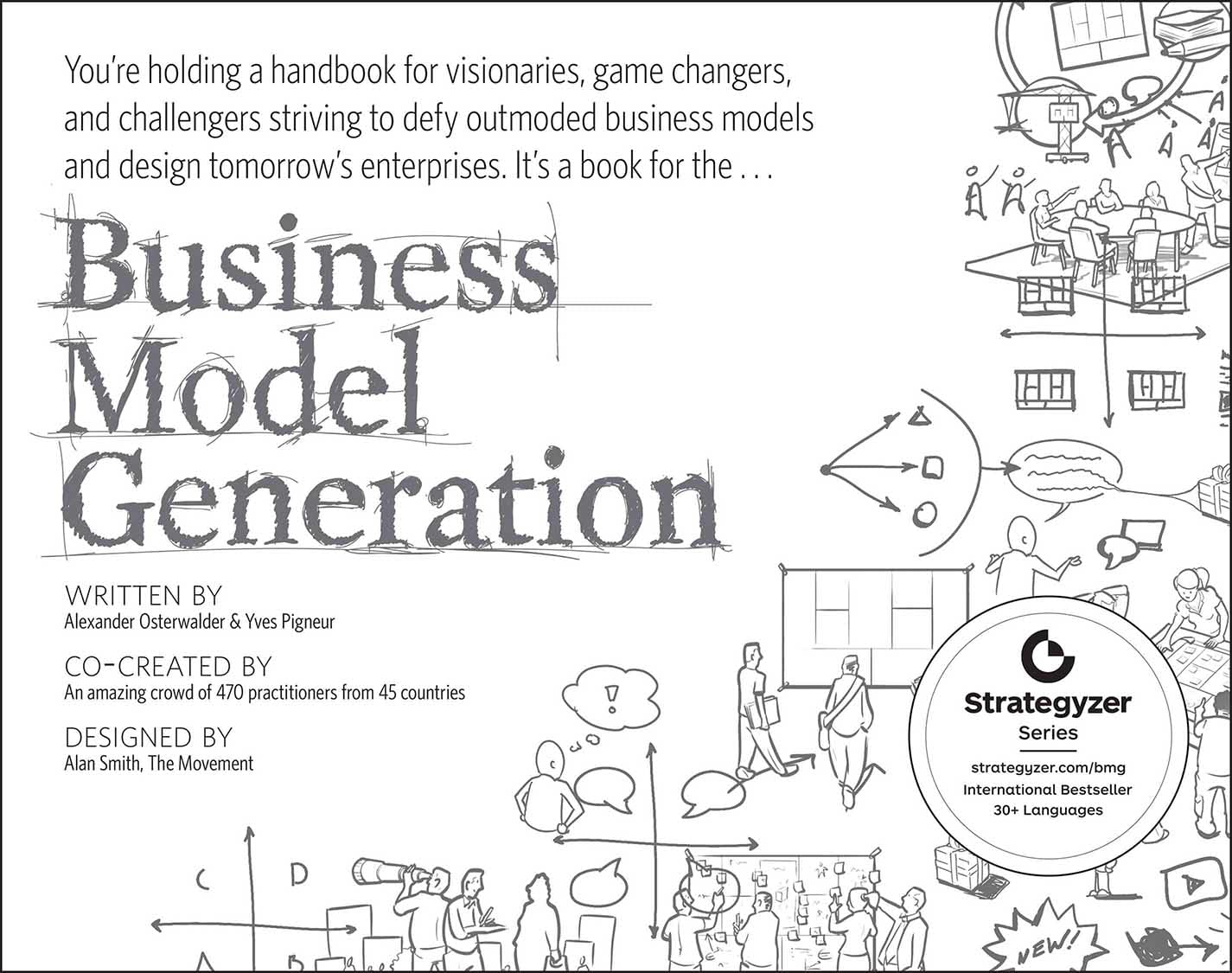
Business Model Generation: A Handbook for Visionaries, Game Changers, and Challengers
Business Model Generation is a handbook for visionaries, game changers, and challengers striving to defy outmoded business models and design tomorrow's enterprises. By Alex Osterwalder & Yves Pigneur.

The Mom Test: How to Talk to Customers & Learn if Your Business is a Good Idea
How to Talk to Customers & Learn if Your Business is a Good Idea by Rob Fitzpatrick.

Traction: How Any Startup Can Achieve Explosive Growth
Gabriel Weinberg's playbook for getting customers. 19 traction channels explained.
Tools & Resources
Software and services to accelerate your Validation stage.
 tools
tools
Emergent.sh
Chat interface design tool for frontend and backend development. Coupon code: ROVNRMMG for 5% off on all payments
 courses
Ikigai: The Japanese Secret to a Long and Happy Life Hardcover
Ikigai: The Japanese Secret to a Long and Happy Life explores the Japanese concept of ikigai—the overlap of what you love, what you're good at, what you can be paid for, and what the world needs—as the key to a happier and longer life.
 tools
tools
Lovable.dev
AI-powered platform that builds full-stack web applications and websites from simple, natural language prompts.
 tools
tools
Qoder
Qoder is a next-generation AI-powered coding platform developed by Alibaba, designed to go beyond simple code completion and act as an agentic coding environment for real-world software development. Here’s what makes it unique:
 courses
The Power of Regret: How Looking Backward Moves Us Forward
The Power of Regret: How Looking Backward Moves Us Forward
 courses
Idea Validation in Entrepreneurship
Learn how to test if your entrepreneurial ideas can be made into a successful business or not with this free course.
Some links are affiliate links. We may earn a small commission at no extra cost to you.
Works Cited & Recommended Reading
The Mom Test
by Rob FitzpatrickRules for honest customer conversations: talk about their life, not your idea. Get specifics, not hypotheticals. Required reading before any discovery call.
PB2: Validate Your Concept — the customer conversation framework.The Lean Startup
by Eric RiesBuild-measure-learn loop and MVP concept. Validated learning is faster and cheaper than building the "right" thing from day one.
PB2 & PB3: Validate + Business Model.Testing Business Ideas
by David J. Bland & Alexander OsterwalderA library of 44 experiments that help you choose the right test for each specific hypothesis. Don't default to interviews for everything.
PB2: Validate Your Concept — choosing the right validation experiment.Ready to Start Your Launch Journey?
LeanPivot.ai has 85+ AI-powered tools to help you translate expertise into a real business.
Create Free Account