Unlock This Playbook
Create a free account to access execution playbooks
Already have an account? Sign in
Five Core Principles of Lean Agentic Thinking
Master decomposition, feedback loops, data liquidity, guardrails, and measurement-driven optimization.
Building Mental Models for Rapid Iteration
To be an effective lean founder with agents, you need more than tools and tactics. You need mental models -- frameworks for thinking about problems that guide your decisions when the specifics change. These five principles are the operating system for your agentic mindset. They apply regardless of which tools you use, which tasks you automate, or how your business evolves.
Each principle addresses a common failure mode. Founders who violate these principles build agents that are brittle, expensive, untrustworthy, or impossible to improve. Founders who internalize them build agents that are modular, efficient, reliable, and continuously getting better.
The Five Principles
1. Decomposition Over Monoliths
Break complex tasks into smaller subtasks that agents can execute in parallel. Think pipelines, not programs.
2. Feedback Loops Over Fire-and-Forget
Design systems where agents report progress, you review and adjust, and the system improves continuously.
3. Data Liquidity Over Data Silos
Organize your data so agents can access it instantly and use it effectively from a single source of truth.
4. Guardrails Over Autonomy
Define clear boundaries. Escalate to humans for critical decisions. Trust is earned through constrained competence, not unchecked power.
5. Measurement Over Intuition
Define metrics. Measure everything. Optimize based on data, not gut feelings. What gets measured gets improved.
Principle 1: Decomposition Over Monoliths
Break complex tasks into smaller subtasks that agents can execute in parallel. The traditional mindset asks "How do I do this task?" The lean agentic mindset asks "How do I break this into subtasks that agents can do in parallel?"
Example: Customer Onboarding
Traditional (Sequential)
- Verify email (5 min)
- Create account (5 min)
- Send welcome email (5 min)
- Schedule call (10 min)
- Add to CRM (5 min)
- Notify team (5 min)
Total: 35 minutes (all sequential)
Lean (Parallel)
- Agent 1: Verify email + create account (5 min)
- Agent 2: Send welcome email (5 min)
- Agent 3: Schedule call (10 min)
- Agent 4: Add to CRM + notify team (5 min)
Total: 10 minutes (all in parallel) -- 3.5x faster
By decomposing, you get 3.5x faster execution. But the benefit goes beyond speed. Each sub-agent is simpler, easier to test, easier to replace, and easier to improve independently. If the scheduling agent has issues, you fix that one agent without touching the others.
The Decomposition Test
For any workflow you want to automate, ask: "Can I break this into 3-5 independent subtasks?" If yes, build separate agents for each. If no, the workflow may be too tightly coupled -- simplify it before automating.
Principle 2: Feedback Loops Over Fire-and-Forget
Design systems where agents report progress, you review and adjust, and the system improves continuously. Without feedback loops, your agents stay frozen at their initial quality level. With feedback loops, they improve every single week.
Example: Email Triage Accuracy Improvement
| Week | Agent Report | Your Action | Result |
|---|---|---|---|
| Week 1 | "Triaged 500 emails. Accuracy 92%." | Add 5 keywords to improve categorization | Accuracy improves to 96% |
| Week 2 | "Triaged 500 emails. Accuracy 96%." | Add feature comparison to reports | Agent incorporates new feature |
| Week 3 | "Triaged 500 emails. Accuracy 97%. Added feature comparison." | Fine-tune edge cases | Approaching production-grade quality |
The Compounding Effect
Without feedback loops, accuracy stays at 92% forever. With feedback loops, it improves to 97% in 3 weeks -- and keeps improving.
This is the same principle that makes lean startups successful: rapid iteration based on real data. The difference is that with agents, the iteration cycle is measured in days, not months.
Principle 3: Data Liquidity Over Data Silos
Organize your data so agents can access it instantly and use it effectively. Data liquidity is the single biggest determinant of agent effectiveness. An agent with access to clean, centralized data produces dramatically better results than an agent struggling to reconcile information across five different systems.
Low Liquidity (Bad)
- Customer names in Salesforce
- Emails in Gmail
- Transactions in Stripe
- Tickets in Zendesk
- Feedback in Slack
Agent needs to query 5 systems, reconcile data, handle inconsistencies. Slow and error-prone.
High Liquidity (Good)
- Central database with unified customer records
- Fields: customer_id, name, email, lifetime_value, support_score, feedback_sentiment
- Regular syncs from all sources
- Clear data quality standards
Agent queries one system, gets instant answer. Fast and accurate.
The Practical First Step
You do not need to build a data warehouse on day one. Start with a simple Google Sheet or Airtable base that aggregates key customer data from your most critical systems. Even this basic level of data centralization dramatically improves agent performance. As your agent portfolio grows, invest in proper data infrastructure.
Principle 4: Guardrails Over Autonomy
Define clear boundaries. Escalate to humans for critical decisions. The fastest way to kill trust in an agent system is to let an agent make a mistake on something that matters. Guardrails are not limitations -- they are the foundation of trust.
Scope Boundaries
"Email agent can triage and draft responses. Cannot send without approval."
Financial Boundaries
"Sales agent can offer discounts up to 10%. Anything higher needs manager approval."
Escalation Rules
"If customer sentiment < -0.7, escalate to human immediately."
Audit Trails
"Log every decision with reasoning." This creates accountability and enables post-hoc analysis of agent behavior.
Kill Switches
"If error rate > 5%, pause and alert team." An automatic circuit breaker prevents cascading failures.
The Trust Equation
Guardrails build trust. Trust enables autonomy. Start with tight guardrails and loosen them as the agent proves its competence through consistent, measured performance. A constrained agent that performs reliably earns more autonomy over time than an unconstrained agent that makes one costly mistake.
Principle 5: Measurement Over Intuition
Define metrics. Measure everything. Optimize based on data. Without measurement, you are guessing. You do not know if the agent is actually helping. You do not know where to improve. You do not know when something is going wrong until it is too late.
Input Metrics
- Volume: 500 emails/day
- Quality: 95% properly formatted
- Consistency: Stable over time
Process Metrics
- Speed: 2 seconds/email
- Accuracy: 98% correct
- Cost: $0.001/email
Output Metrics
- Completeness: 100% categorized
- Timeliness: Within 1 minute
- Impact: Enables faster response
Outcome Metrics
- Time saved: 10 hours/week
- Cost savings: $500/month
- Quality: 40% faster response
With these four layers of metrics, you can identify problems (accuracy dropped?), diagnose root causes (input quality changed?), and optimize targeted improvements (fix the specific failure mode). Without measurement, you are flying blind.
How These Principles Compound Over Time
These five principles are not independent -- they reinforce each other in a compounding cycle:
- Decomposition makes agents simpler, which makes measurement more precise.
- Measurement generates data that powers feedback loops.
- Feedback loops improve accuracy, which builds trust to loosen guardrails.
- Guardrails prevent catastrophic failures, which preserves the data you need for the next iteration.
- Data liquidity ensures every agent has the context it needs, which enables better decomposition of complex workflows.
The founders who internalize all five principles do not just build better agents. They build better agents faster, and the gap between them and everyone else widens with every iteration cycle.
Capstone Exercise: Design Your Feedback Loop
Complete This Exercise (1 Hour)
Apply all five principles to your Quick Win (from Chapter 3's ROI Matrix capstone) by designing the feedback loop and measurement system that will make your agent continuously better.
- Select your Quick Win (from the Chapter 3 capstone)
- Design your feedback loop:
- What will the agent report? (progress, results, issues)
- How often will you review? (daily, weekly)
- What metrics will you track?
- What adjustments might you make?
- Define your guardrails:
- What is the agent allowed to do?
- What is off-limits?
- When does it escalate to a human?
- Set up your measurement system:
- Input metrics: What are you monitoring about the inputs?
- Process metrics: How is the agent performing internally?
- Output metrics: What is it delivering?
- Outcome metrics: What is the business impact?
Document this in a single page. This document becomes the operating manual for your first agent -- the reference you use when reviewing performance and deciding what to improve.
With the five principles internalized, you are ready to execute. In the next chapter, we bring everything together into Your 90-Day Lean Sprint -- a week-by-week plan that transforms you from operator to orchestrator in 12 weeks.
Design Your Agent Architecture
Use our AI-powered tools to map your data flows, identify decomposition opportunities, and design guardrail systems for your autonomous agents.
LeanPivot AI Tools
AI-powered tools to help you execute this stage faster.
Lean Canvas Generator
Map your agent-powered business model on a single page.
Business Plan Generator
Create a lean business plan incorporating your agent strategy.
AI Business Blueprint
AI-powered business concept development and validation.
AI Insights Generator
Scan market trends and identify agent opportunities.
Recommended External Tools
Third-party tools that complement this stage of your journey.
Recommended Reading
Essential books for the Ideation stage.

Running Lean: Iterate from Plan A to a Plan That Works
Ash Maurya's practical guide to Lean Canvas and continuous innovation.
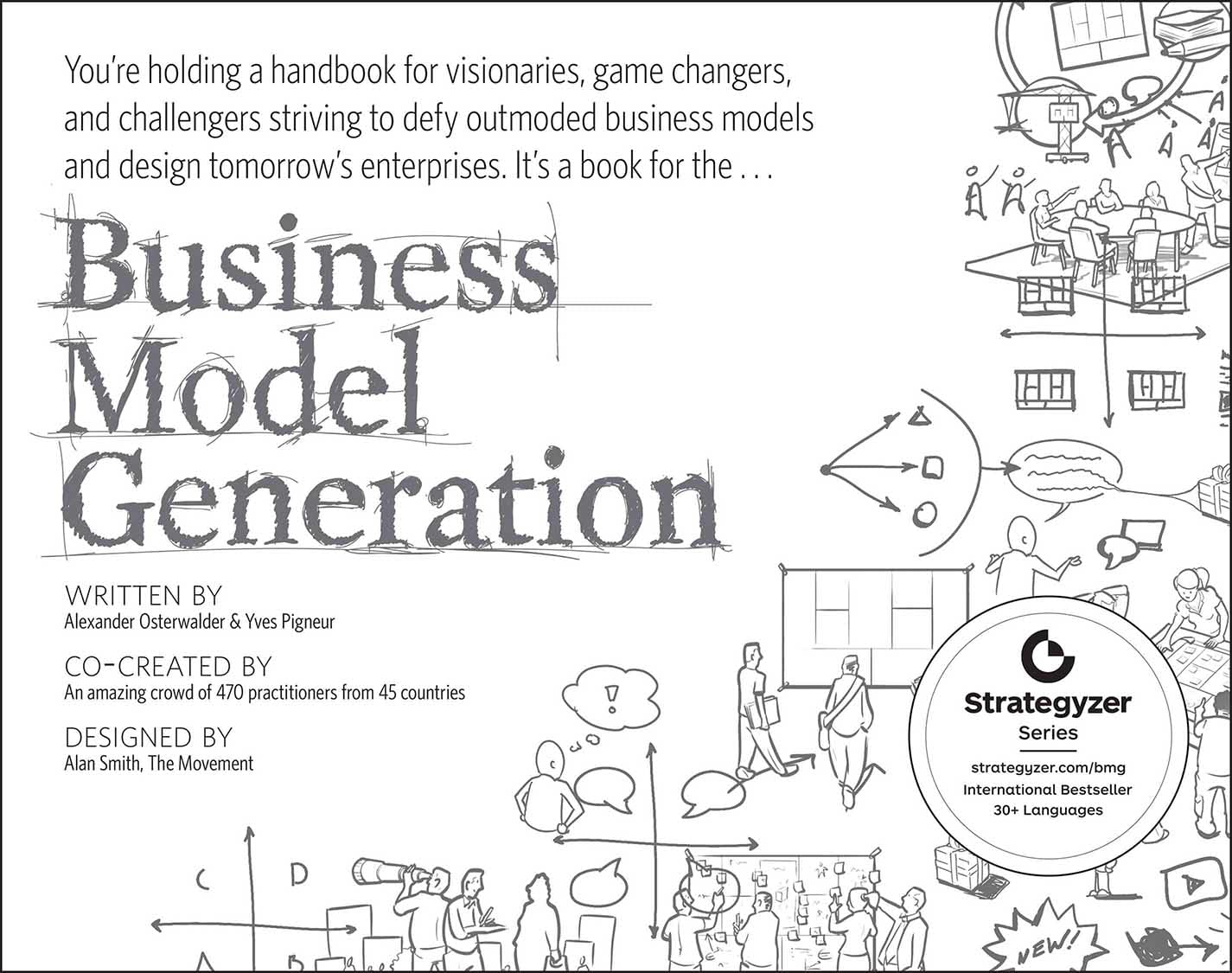
Business Model Generation: A Handbook for Visionaries, Game Changers, and Challengers
Business Model Generation is a handbook for visionaries, game changers, and challengers striving to defy outmoded business models and design tomorrow's enterprises. By Alex Osterwalder & Yves Pigneur.

Traction: How Any Startup Can Achieve Explosive Growth
Gabriel Weinberg's playbook for getting customers. 19 traction channels explained.

The Mom Test: How to Talk to Customers & Learn if Your Business is a Good Idea
How to Talk to Customers & Learn if Your Business is a Good Idea by Rob Fitzpatrick.
Tools & Resources
Software and services to accelerate your Ideation stage.
 courses
The Power of Regret: How Looking Backward Moves Us Forward
The Power of Regret: How Looking Backward Moves Us Forward
 tools
tools
Emergent.sh
Chat interface design tool for frontend and backend development. Coupon code: ROVNRMMG for 5% off on all payments
 courses
Ikigai: The Japanese Secret to a Long and Happy Life Hardcover
Ikigai: The Japanese Secret to a Long and Happy Life explores the Japanese concept of ikigai—the overlap of what you love, what you're good at, what you can be paid for, and what the world needs—as the key to a happier and longer life.
 tools
tools
Lovable.dev
AI-powered platform that builds full-stack web applications and websites from simple, natural language prompts.
 tools
tools
Qoder
Qoder is a next-generation AI-powered coding platform developed by Alibaba, designed to go beyond simple code completion and act as an agentic coding environment for real-world software development. Here’s what makes it unique:
 software
Comet: Your AI Browser for Instant Insight and Action
Perplexity AI is an advanced answer engine and AI-powered research tool that delivers conversational, source-cited responses. It streamlines information discovery for users and businesses with context retention, multiple focus modes (Web, Academic, Social, Video, Writing, Math), and enterprise-grade privacy. Key features include deep research, personalized follow-ups, and integrations with business tools for workflow automation. Perplexity is trusted by millions for research, content creation, market analysis, and more.
Some links are affiliate links. We may earn a small commission at no extra cost to you.
Save Your Progress
Create a free account to save your reading progress, bookmark chapters, and unlock Playbooks 04-08 (MVP, Launch, Growth & Funding).
Ready to Build Autonomous Agents?
LeanPivot.ai provides 85+ AI-powered tools to help you design and deploy autonomous agents the lean way.
Start Free TodayWorks Cited & Recommended Reading
AI Agents & Agentic Architecture
- Ries, E. (2011). The Lean Startup: How Today's Entrepreneurs Use Continuous Innovation. Crown Business
- Maurya, A. (2012). Running Lean: Iterate from Plan A to a Plan That Works. O'Reilly Media
- Coeckelbergh, M. (2020). AI Ethics. MIT Press
- EU AI Act - Regulatory Framework for Artificial Intelligence
Lean Startup & Responsible AI
- LeanPivot.ai Features - Lean Startup Tools from Ideation to Investment
- Anthropic - Responsible AI Development
- OpenAI - AI Safety and Alignment
- NIST AI Risk Management Framework
This playbook synthesizes research from agentic AI frameworks, lean startup methodology, and responsible AI governance. Data reflects the 2025-2026 AI agent landscape. Some links may be affiliate links.