
The transition from a validated idea to a tangible product is the most volatile stage of any startup journey. While the ethos of an MVP is "Minimum," many founders mistake this for "disposable." Building a Minimum Viable Product is not just about writing code or assembling a landing page; it is about constructing a foundation that is lean enough to pivot, yet sturdy enough to support the weight of future success. For the solopreneur, this stage represents the ultimate test of prioritization—where every hour spent on a feature is an hour stolen from customer discovery or marketing. This guide serves as a blueprint for navigating those high-stakes technical and strategic decisions.
Prioritizing Scalability (The "Later" Philosophy)
While you're building your MVP, you don't need to prepare for millions of users right away. In fact, doing so is often a death sentence for startups, a phenomenon known as Premature Optimization. When you spend months building a system that can handle 100,000 concurrent requests before you’ve even made your first $100, you are wasting the most valuable resource you have: time. However, it is a strategic error to build with total disregard for the future. It’s smart to Prioritize Scalability (Later).
This is a delicate balancing act. If you over-engineer for scale too early, you waste precious time and capital on infrastructure you don't need. If you ignore it entirely, you create "technical debt" that could bankrupt your time when you finally hit a growth spurt. The goal is to make "reversible" decisions—choices that solve today's problems without slamming the door on tomorrow's solutions. If you hard-code your logic in a way that assumes you will only ever have ten users, you are creating a trap for yourself. If you use standard patterns and modular logic, you are building a ladder.
Making Informed Architectural Choices
Making choices now that won't cause major problems when your user base eventually grows means thinking generally about how your database will be set up and how your servers will work, without making things too complicated for your current stage. For example, choosing a relational database (like PostgreSQL) versus a non-relational one (like MongoDB) should be a decision based on the nature of your data. If your data is highly structured with clear relationships—such as a marketplace where users, orders, and products must all stay perfectly in sync—a relational database provides integrity that will save you months of headaches later.
The main focus should be on getting it right for your initial group of users first. Planning for future growth doesn't mean over-building now; it means making informed choices that won't limit you later. For example, choosing a database system that can handle more data and users in the future, even if you don't need that capacity today, sets you up for success. This foresight ensures your initial build is adaptable, allowing you to scale vertically (adding more power to one server) before needing to scale horizontally (adding many servers).
Modular Design and APIs
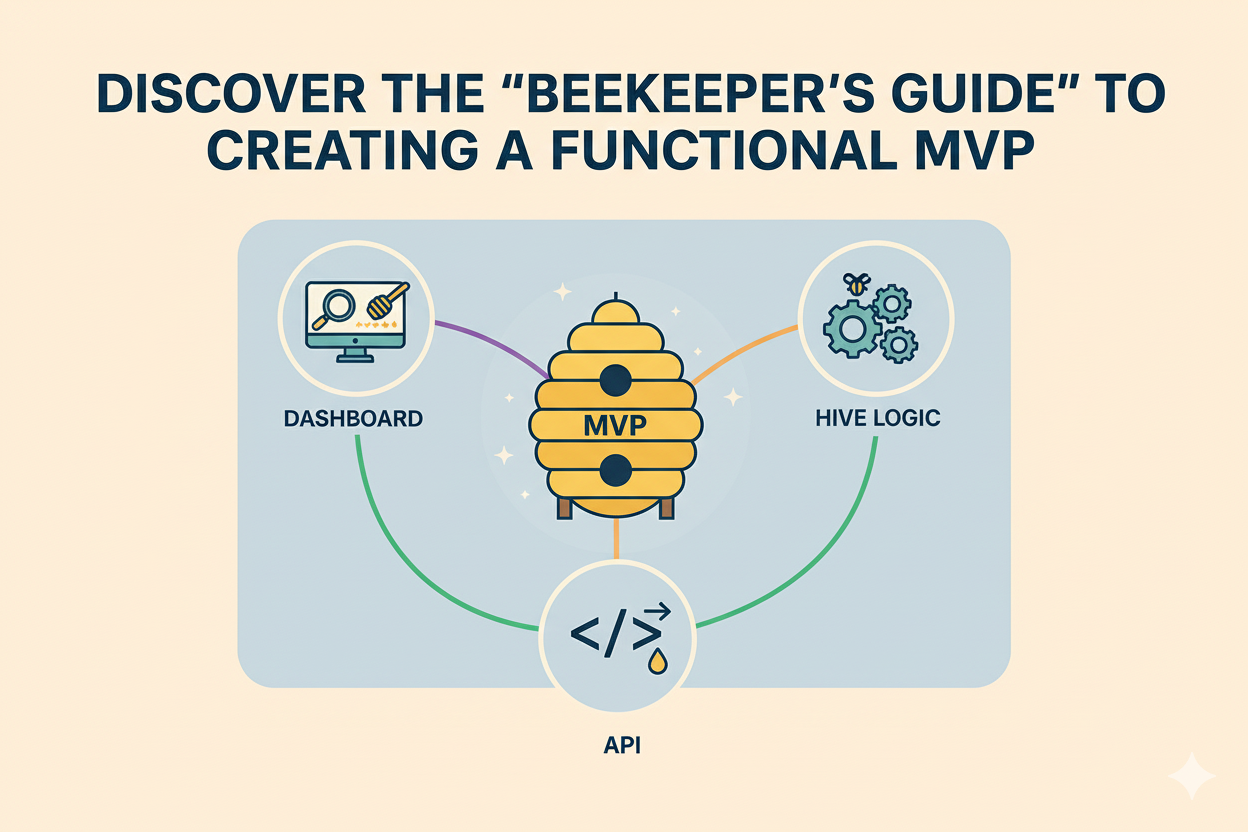
One way to ensure scalability without over-building is to adopt a modular approach. Instead of a "spaghetti" code mess where everything is interconnected, try to keep different functions of your app somewhat separate. Even if they live on the same server for now, keeping the logic distinct ensures that if one part of your app—like image processing, notification handling, or payment gateways—becomes a bottleneck, you can scale that specific part independently later.
By building with an "API-first" mindset—where your frontend and backend communicate via clearly defined protocols—you make it much easier to swap out components. If you decide to change your web dashboard for a native mobile app later, your backend won't need a total rewrite because the communication logic is already standardized. This modularity is the secret to moving fast today and scaling smoothly tomorrow.
Choosing Your Tech Stack: Velocity over Vanity
When you Choose Your Tech Stack Wisely, you're selecting the tools and programming languages that will build your product. These choices can greatly affect how quickly you can develop, how well your product can grow, and how easy it is to maintain later. For an MVP, it's best to choose tools that allow for quick creation and have large, helpful online communities. A massive community means you can find answers to common problems on Stack Overflow or GitHub in seconds, rather than hours of frustration.
For web applications, popular choices known for fast development include JavaScript frameworks like React, Vue.js, or Angular. On the backend, Python frameworks like Django or Flask, or Ruby on Rails, are excellent options. These environments are optimized for developer productivity, meaning you spend less time writing "boilerplate" code and more time building features that users actually care about. They follow the philosophy of "Convention over Configuration," which helps you avoid making 1,000 tiny decisions that don't add value to the customer.
Mobile Strategy: The Cross-Platform Advantage
If you're building mobile apps, consider cross-platform development tools. In the past, you had to build two separate apps: one for iOS (using Swift) and one for Android (using Kotlin). This doubled your costs and development time. Today, tools like React Native or Flutter can save a lot of time and money. This allows you to reach a wider audience with less effort. By using these tools, you can deploy your app to both major mobile platforms from a single codebase, significantly accelerating your launch timeline and reducing development costs. For a solopreneur, being able to maintain one codebase instead of two is often the difference between a successful launch and a project that stalls due to complexity.
The Rise of No-Code and Low-Code
Additionally, Leverage No-Code/Low-Code Tools. If your product idea doesn't require highly specialized or complex functions, explore platforms that require little to no coding. Platforms like Bubble, Webflow, or Glide let you build working applications using visual interfaces. They are incredibly useful for testing ideas quickly and affordably. You can find tools that help you create landing pages, simple databases, automate workflows (like Zapier), or even build basic web applications without writing any code. This empowers you to bring your ideas to life faster and allows you to focus on user experience and core features rather than getting bogged down in the technicalities of syntax and server management.
"No-code and low-code tools empower founders to build functional applications with minimal technical expertise, effectively turning an idea into a testable hypothesis in days rather than months."
Resource Planning: Building Smart, Not Just Fast
Building your MVP requires resources, mainly your time and potentially some money. Planning carefully will prevent you from getting burned out or running out of funds before you’ve learned anything important. Effective resource management is crucial for maintaining momentum and ensuring your project stays viable. It's about making the most of what you have to achieve your learning goals. In the early days, "staying alive" is just as important as "shipping features."
Time: Your Primary Currency
Understand that Time is Your Primary Currency, especially for solopreneurs. Time is often the most limited resource. Unlike money, time cannot be raised in a Series A round. Once it is spent, it is gone. Be realistic about how much time you can dedicate to development each week. If you are working a 9-to-5, maybe you only have 10 high-quality hours. Treat those hours like gold.
Strategies for Time Management:
- The 80/20 Rule: Identify the 20% of features that will provide 80% of the value to your users. Build those first and ignore the rest ruthlessly.
- Task Atomization: Break down your MVP features into small, easy-to-manage tasks (e.g., "Create Login Screen" instead of "Build User System"). This makes the process feel less overwhelming and allows for steady, visible progress.
- Time Tracking: Use tools like Toggl or simple spreadsheets to see where your hours are going. You might find you're spending four hours on a logo when that time should have been spent on the core value proposition.
By treating your time as a valuable asset and managing it wisely, you ensure consistent progress and avoid burnout—the number one killer of early-stage startups.
Budgeting for Essential Tools
When it comes to Budgeting for Essential Tools, remember that even a lean approach might require some investment. There is a common misconception that "Lean" means "Free." In reality, paying $20 a month for a tool that saves you 10 hours of manual work is the most "Lean" decision you can make. Essential investments often include hosting, domain names, specialized software subscriptions (like AI pair programmers), and project management tools. These investments are often minor compared to the cost of delays or rework caused by not having the right infrastructure.
Strategic Outsourcing
If there are highly specialized technical tasks you can't handle yourself, consider Outsourced Components (if necessary). A common mistake for solo founders is trying to learn "everything." If you are a marketing genius but have never touched a database, spending three months learning SQL might be a poor use of resources. This means hiring help for small, clearly defined parts of the project rather than the entire thing. This allows you to get expert help without the commitment of a full-time employee. A freelancer can do in 5 hours what might take you 50. This strategic outsourcing ensures critical components are handled by experts, maintaining project quality while you focus on the "Core Value Proposition."
The Strategy of Phased Development
A key strategy is Phased Development. Avoid the "Big Bang" launch where you try to build everything at once. Plan your MVP in stages. Ask yourself: What is the absolute minimum needed for the very first version (V0.1)? What can be added in a second phase based on the initial feedback you receive? This step-by-step approach ensures that you are always focusing on building what provides the most value to your users. Each phase builds upon the last, creating a more robust product over time. This iterative process minimizes risk; if you discover your initial idea was wrong, you've only lost weeks of work, not months.
Case Study: The Niche Hobby Subscription Box
Consider a founder developing a subscription box service for people with niche hobbies, such as vintage mechanical keyboard enthusiasts.
The Over-Builder’s Path:
- Spends $5,000 on custom-branded boxes before making the first sale.
- Buys $10,000 in inventory upfront based on "gut feeling."
- Hires a developer to build a custom "Subscription Management Portal" from scratch.
- Result: If the market doesn't want the box, the founder is $15k in debt with a garage full of inventory that won't sell.
The MVP Path:
Their MVP could be much simpler. They might use a basic website builder like Squarespace or Shopify with a simple recurring payment plugin. For the first 20 boxes, they personally select, pack, and ship them to a small group of early customers found on Reddit or niche forums. This approach helps:
- Validate Demand: Do people actually click "Buy" on a basic landing page?
- Test Sourcing: Can the founder actually find enough components to fulfill boxes?
- Refine the Offering: Maybe customers hate the keycaps but love the custom switches.
- Minimize Risk: The total cost was perhaps $500 instead of $15,000.
Development Frameworks and Methodologies
While the focus is on the "BUILD" stage, understanding how to organize your development process is vital for working efficiently. A structured approach ensures that your building efforts are focused, adaptable, and productive. It's about creating a system that supports continuous learning and improvement. Without a methodology, development often becomes a series of "firefighting" sessions rather than a steady march toward a goal.
Agile Principles for the Solo Founder
You can apply Agile Principles (Even for One). Agile is not just for large teams at Google; it is a mindset. For a solopreneur, this means working in short periods, called Sprints (usually 1–2 weeks). At the end of every week, you should have something "shippable"—even if it's just a new landing page or a refined signup flow.
- Sprint Planning: On Monday, decide on three specific features to finish.
- The Build: Work exclusively on those three features—ignore "feature creep."
- The Review: On Friday, demo what you built (even if just to yourself) and assess if it works.
- The Retrospective: Ask: "What slowed me down this week?" and fix your workflow for Monday.
The "Build-Measure-Learn" Loop
Always remember The "Build-Measure-Learn" Loop in Action. The BUILD phase is just one part of a bigger cycle. As you build, have a clear plan for how you will MEASURE the results and LEARN from them. This feedback loop is what stops you from building something that nobody wants.
The Goal: To identify 2-3 core KPIs that, if improved, would signal genuine progress towards your business goals. These are the numbers you’ll obsess over.
Before diving into a sea of data, identify your single most important metric—your "North Star Metric." This is the metric that best captures the core value your product delivers to customers. For a social networking app, it might be the number of active daily users. For an e-commerce store, it could be the number of completed purchases. Focus on moving this one metric forward.
Building Your Measurement Framework: The How-To
Once you know what to measure, you need to figure out how to measure it. This involves setting up the right systems to collect data accurately and consistently. For solopreneurs and early-stage founders, this means leveraging accessible tools and focusing on simplicity.
1. Analytics Setup and Tracking:
- Website/App Analytics: Tools like Google Analytics (GA4) are indispensable. They track traffic, user behavior, and conversion goals. Actionable Setup: Set up "Goals" or "Conversions" in GA4 to track specific actions (e.g., signing up for a demo, filling out a form).
- Product Usage Analytics: For software products, understanding how users interact with features is critical. Identify the core actions users take that indicate they are getting value and track these diligently.
- CRM and Sales Tracking: Even a simple spreadsheet can serve as a CRM. Track leads, interactions, and deal progress. This helps you understand which marketing channels are most effective by tracking the lead source.
2. Data Collection Methods:
- Surveys and Feedback Forms: Direct feedback is invaluable. Use tools like Typeform or Google Forms to gather insights. Ask targeted questions about pain points rather than general likes/dislikes.
- User Interviews: Conducting interviews provides deep qualitative insights. Prepare open-ended questions and focus on understanding the customer's problems and current solutions.
- A/B Testing (Split Testing): Validate specific changes (headlines, CTA placement) by showing two versions to different audience segments. Start small by testing one element at a time.
- Observational Data: Simply watching how users interact with your product can reveal usability issues or unmet needs that surveys might miss.
Don't wait for the "perfect" analytics setup. Start with one or two key metrics and a basic tracking system. Google Analytics is a great starting point for websites. For product usage, start by logging the most critical user actions. You can always build more sophisticated tracking later.
Turning Data into Decisions: The Art of Validated Learning
Measurement isn't just about collecting numbers; it's about using those numbers to drive your learning and decision-making. This is the heart of validated learning. Every experiment you run, every feature you build, should be an opportunity to test a hypothesis and gather data to prove or disprove it.
The Philosophy of Iteration
Finally, understand that Iteration is Key. Your first version is rarely your final one. Accept that you will build, get feedback, and then build again, making improvements based on what you discover. This ongoing process of building and refining is the core of lean product development. It’s about constantly getting better, not about achieving perfection on the first try. Each iteration brings you closer to a product that truly meets user needs. The "MVP" is just the first conversation you have with your market; iteration is the ongoing dialogue.
Technical Decision-Making: Avoiding the "New Shiny" Trap
When building an MVP, there is a massive temptation to use the latest, trendiest technology. This is often a mistake that leads to "Tutorial Purgatory."
The Rule of Boring Technology:
For an MVP, use the tools you know best. If you know Ruby on Rails but everyone is talking about a new framework that just came out last month, use Ruby on Rails. Why? Because your goal is to validate a business, not to learn a new language. "Boring" technology is stable, documented, and reliable. Every hour you spend reading documentation for a new tool is an hour you aren't spending talking to customers.
When to Choose "New" Over "Known":
Only choose a new technology if it provides a fundamental advantage to your MVP's core value proposition. If your app requires real-time collaboration (like a shared whiteboard), then choosing a framework designed for WebSockets makes sense. Otherwise, stick to the "boring" tools that allow you to ship faster.
Documentation: The Gift to Your Future Self
Even in a rush, document your code and your logic. Why? Because in six months, when you finally have the funding to hire a developer, you don't want to spend four weeks explaining how the system works. Write a simple README.md file. Explain how to set up the environment, how the database is structured, and where the most important logic lives. This isn't just for others—it's for you in three months when you've forgotten how your own code works.


No comments yet
Be the first to share your thoughts on this article!