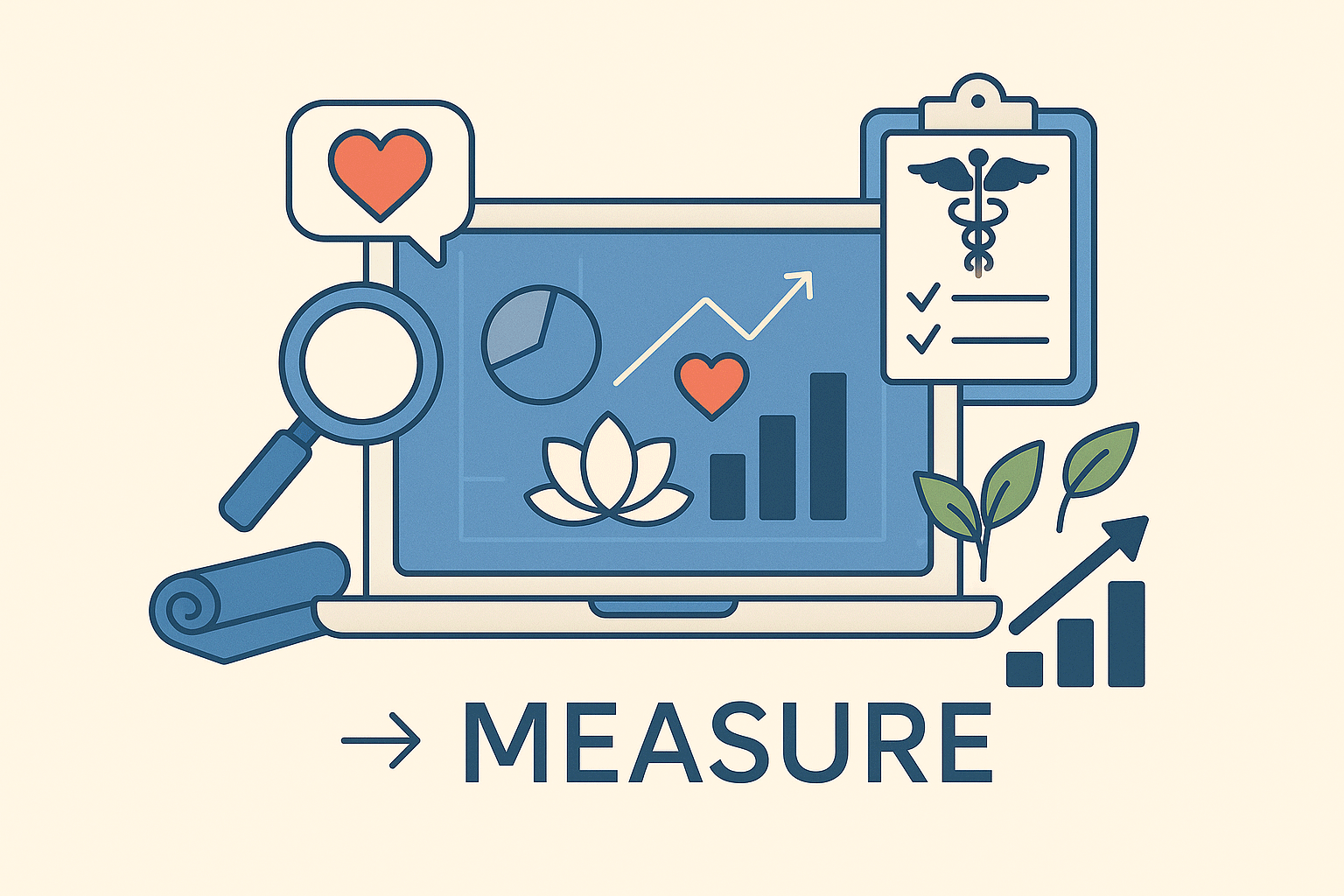
In our first post, we explored how to Build your health and wellness Minimum Viable Product (MVP) using lean principles – starting small and focused to test your core ideas. Whether it's a pilot health coaching program, a series of pop-up yoga classes, a specialized massage offering, or a new introductory med spa service, you've taken that crucial first step. Now, how do you know if it's actually working? Welcome to the "Measure" phase of the Lean Startup cycle. This is where you move from assumptions to evidence, gathering crucial data and feedback to understand how your MVP is truly performing and being received by your target clients. For health and wellness practitioners, this isn't just about numbers; it's about deeply understanding client needs and experiences.
Listening Deeply: The Power of Qualitative Measures in Wellness
In the health and wellness field, client experience and perceived value are paramount. Before diving into spreadsheets, make it a priority to gather qualitative feedback. This means talking to your initial MVP clients. Conduct lean customer interviews – short, focused conversations to understand their experience with your service, what they loved, what frustrated them, and if it truly addressed their needs. Simple, well-phrased surveys can also capture valuable insights about their satisfaction and perceived benefits. Did your 4-week coaching MVP actually help them feel less stressed? Did the new massage technique provide the relief they hoped for? This direct feedback is gold for validating whether you're solving a real problem and if your unique value proposition is resonating.
This direct feedback is gold for validating whether you're solving a real problem and if your unique value proposition is resonating.
Tracking What Counts: Key Performance Indicators (KPIs) for Your Wellness MVP
While qualitative feedback provides the "why," quantitative metrics provide the "what." Tracking Key Performance Indicators (KPIs) will help you objectively assess your MVP's performance:
-
Client Acquisition & Conversion: How many people signed up for your MVP (e.g., workshop attendees, first-time massage clients, introductory med spa package purchasers)? What was your Client Acquisition Cost (CAC) for these initial clients? What percentage of people who inquired about your MVP actually converted into paying clients?
-
Engagement & Usage: For a yoga MVP, what were the class fill rates? For a health coaching pilot, what was client adherence or participation like? Did massage clients rebook after their initial MVP session?
-
Service-Specific Metrics:
-
Health Coaching: Track sign-ups for an initial free webinar that leads to your MVP program, or the completion rate of your pilot program.
-
Medical Spas: Monitor booking rates for your specific MVP service, the average spend per client for that service, and the conversion rate from initial consultations to the MVP treatment.
-
Yoga Studios: Beyond fill rates, track how many attendees of your pop-up MVP classes purchase a small follow-up package or express interest in future offerings.
-
Massage Therapy: Note the re-booking rate of MVP clients or how many referrals are generated from this initial group.
-
-
Early Financial Viability: What was the total revenue generated by your MVP? What were your direct costs to deliver those MVP services? This gives you an early glimpse into the financial sustainability of your core offering.
Simple Tools for Smart Measurement (The Lean Tech Stack)
Measuring your MVP doesn't require a complex or expensive tech suite, especially in the early days. Start lean:
- Booking & Scheduling Systems: Many affordable (or even free-tiered) booking systems, some HIPAA-compliant if needed (like mentalyc.com for therapy, or general tools like those found via workee.net for spas), offer basic reporting on appointments booked, client numbers, and sometimes revenue.
- Payment Processors: Your payment system (technologyadvice.com lists several healthcare options) will provide data on transactions and revenue from your MVP.
- Spreadsheets: Never underestimate the power of a well-organized spreadsheet for manually tracking client interactions, feedback themes, and basic financial calculations for your MVP.
- AI for Summaries (Optional): If you have a slightly larger volume of survey responses or interview notes than you can quickly process, emerging AI tools (aszend.com, businessnucleus.com) might help summarize qualitative feedback or spot initial trends, but always verify these insights.
The key is to choose tools that give you the data you need without adding unnecessary complexity or cost at this early stage.
Actionable vs. Vanity: Knowing What Metrics Drive Decisions for Your Practice
It's easy to get distracted by "vanity metrics" – numbers that look good but don't actually help you make smart business decisions. For your health and wellness MVP, focus on actionable metrics.
-
Vanity: 100 new followers on your Instagram page after announcing your yoga MVP.
-
Actionable: 15 people actually signed up and paid for your pop-up yoga class MVP from that Instagram announcement.
-
Vanity: Your health coaching MVP's landing page got 500 views.
-
Actionable: 25 of those viewers completed your contact form requesting a consultation for the MVP program.
Actionable metrics directly reflect genuine client interest and commitment to your MVP, providing clear signals about its viability.
Your Measurement Mission: Gathering Validated Learning
The "Measure" phase for your health and wellness MVP is all about gathering concrete evidence. These metrics and client insights aren't just numbers or comments; they are the voice of your market telling you what's working, what's not, and where the opportunities lie. This validated learning is the crucial output of this phase. It will empower you to make informed decisions in the next stage: to Learn, adapt, and grow your practice strategically.
Join us for our final post in this series, where we'll explore how to take these measurements and Learn from them to iterate, pivot if necessary, and build a thriving, resilient health and wellness business!






No comments yet
Be the first to share your thoughts on this article!