As a solopreneur or the founder of an early-stage startup, you're driven by a vision. But you're also acutely aware of the tightrope walk: limited resources, boundless uncertainty, and the constant pressure to make the right moves. How do you navigate this challenging landscape and build a venture that not only survives but thrives? The answer often lies in embracing Lean Methodology. At its heart, Lean is about maximizing customer value while ruthlessly minimizing waste. For you, this isn't just a business school theory; it's a practical toolkit for survival and success. This guide will walk you through the essentials of applying Lean, particularly the powerful Build-Measure-Learn cycle, to your unique journey.
Phase 1: BUILD Smart – Laying a Lean Foundation
The "Build" phase in a Lean approach isn't about creating a perfect, fully-featured product or service from day one. It's about smartly creating the minimum necessary to start learning.
Understand True Customer Value First: Before you build anything, get crystal clear on what your target customer truly values. What problem are you solving for them that they are willing to pay to have solved? For solopreneurs, this means deeply understanding client pain points and focusing your unique skills there. For startups, it's about rigorously validating that a real problem exists for a defined customer segment. Don't build what you think is cool; build what they find indispensable.
Map Your Path to Value: Visualize the steps it takes to deliver your product or service – this is your Value Stream Map. Even a simple flowchart can reveal where you're spending time on activities that don't add direct value for the customer (this is "waste" in Lean terms). Identifying and minimizing this waste is crucial when resources are scarce.
Create Your Minimum Viable Product (MVP): The MVP is a cornerstone of Lean Startup. It's the most basic version of your product or service that allows you to test your core business idea and gather maximum validated learning with the least effort. Think of Dropbox's initial simple demo video that validated massive demand before the full product was built. Your MVP should focus only on the core features needed to solve the primary problem for your early adopters. For a solopreneur offering a service, an MVP might be a pilot program, a single workshop, or a basic version of a consulting package.
Embrace Efficient Workflows: As you build, incorporate Lean principles like Creating Flow (optimizing your personal or team workflow to minimize interruptions and delays – think time blocking or batching similar tasks) and establishing a Pull System (working based on actual demand rather than speculative efforts). This ensures your building efforts are focused and efficient.
Phase 2: MEASURE Right – Tracking What Truly Matters
Once your MVP is out in the world, or you’ve delivered your initial lean service, the next critical phase is to Measure its impact. This isn't just about collecting data; it's about collecting the right data that leads to learning.
The Build-Measure-Learn Engine: Remember, this is a cycle. You've built something (your MVP). Now you measure how customers respond, which then fuels your learning for the next iteration.
Listen to Your Customers (Qualitative Measurement): Numbers don't tell the whole story, especially in early stages. Actively seek qualitative feedback. For solopreneurs, this might be direct conversations with initial clients or simple feedback forms. For startups, customer interviews are invaluable for understanding the "why" behind user behavior, their pain points, and their perception of your MVP's value. Ask open-ended questions and listen more than you talk.
Track Actionable Metrics (Quantitative Measurement): It's easy to get swayed by "vanity metrics" (like website page views or social media likes) that look good but don't inform critical business decisions. Instead, focus on actionable metrics – data that reflects real user engagement and business progress. Examples include:
- Conversion Rates: E.g., percentage of landing page visitors who sign up for your MVP.
- Engagement Metrics: E.g., how actively users are using the core feature of your MVP.
- Client Acquisition Cost (CAC): How much it costs you to get one MVP customer.
- Retention/Re-booking Rates: For service-based solopreneurs, are initial clients coming back?
- Early Revenue/Sales from MVP: The ultimate validation of value.
Use Simple Tools: You don't need complex analytics dashboards initially. Google Forms for surveys, simple website analytics, payment processor data, and even well-organized spreadsheets can be powerful measurement tools for lean ventures.
Eliminate Waste in Measurement Too: Don’t waste time tracking dozens of metrics if only a few truly reflect whether your core hypotheses are being validated. Focus your measurement efforts.
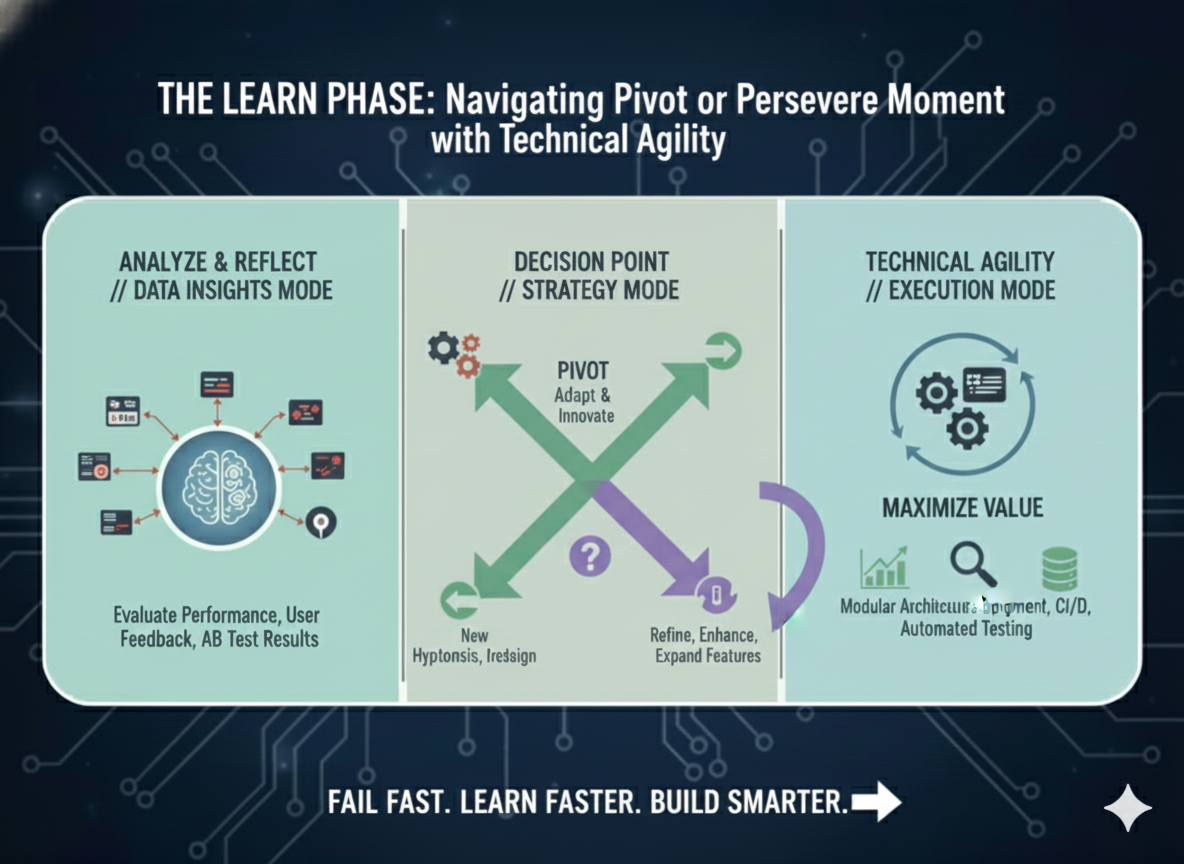
Phase 3: LEARN Fast & Adapt – Turning Insights into Growth
The "Learn" phase is where the real progress happens. You've built your MVP and measured its reception. Now, you analyze that information to make informed decisions that will shape the future of your venture.
The Goal: Validated Learning: The entire purpose of the Build-Measure-Learn cycle is to achieve validated learning – to replace assumptions with facts based on empirical data and real customer feedback. Did your MVP solve the problem you thought it would? Did customers perceive the value you intended?
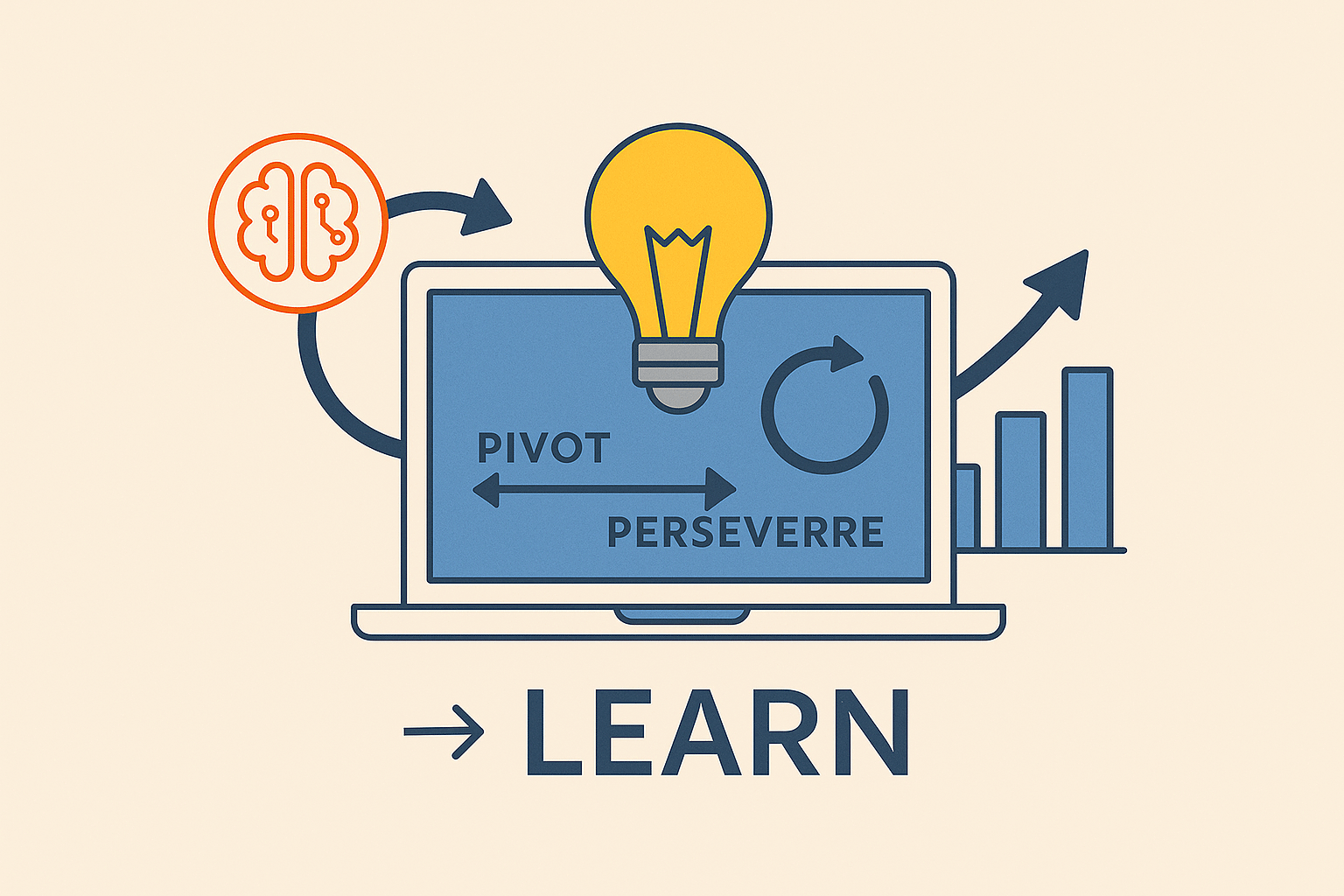
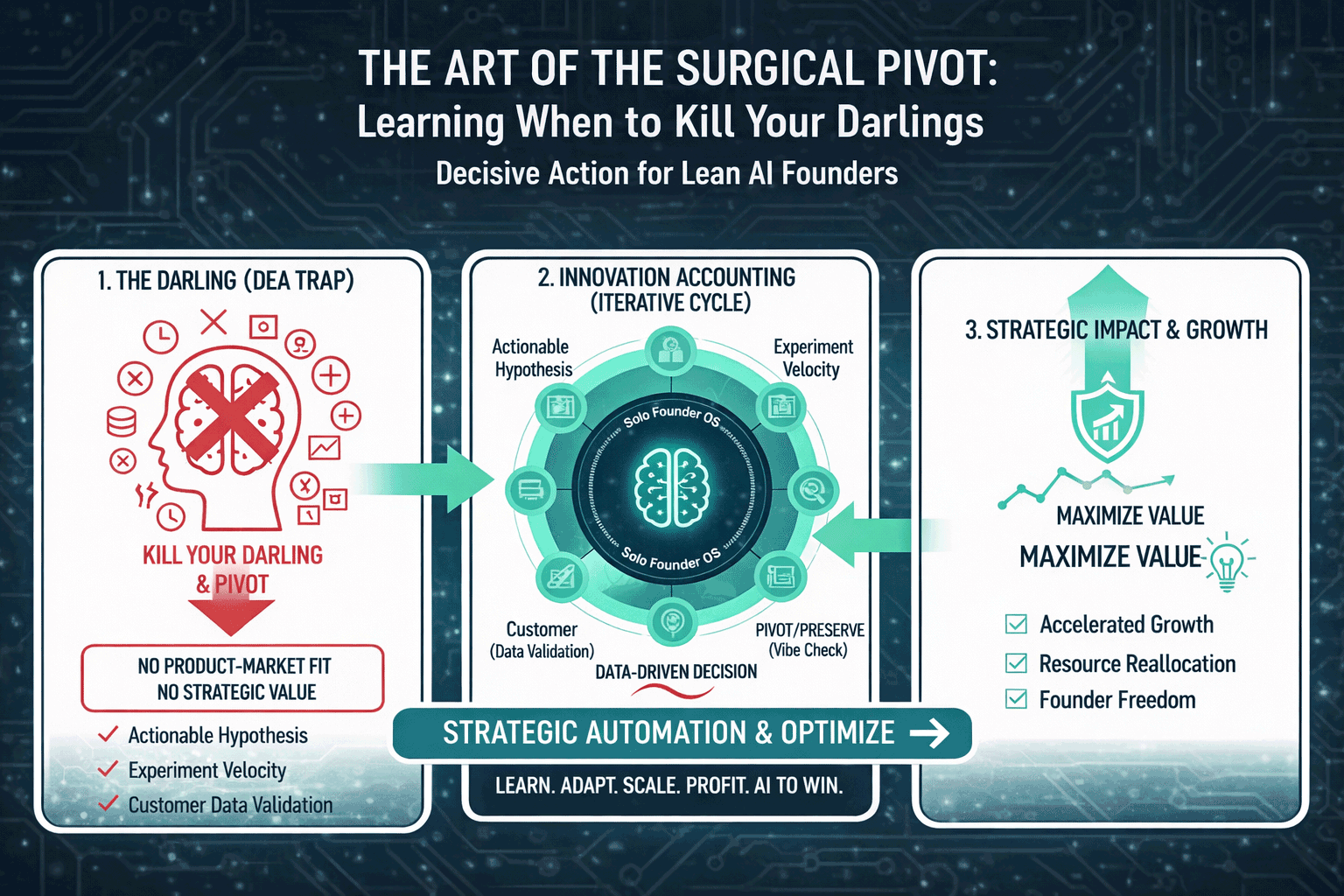
Based on your validated learning, you'll face a crucial strategic choice: Pivot or Persevere?
The Big Decision: Pivot or Persevere? Based on your validated learning, you'll face a crucial strategic choice:
- Persevere: If the data and feedback are positive and indicate you're on the right track, you persevere. This means continuing to optimize your current offering, perhaps adding features incrementally based on what you've learned, and working to scale your success.
- Pivot: If your core assumptions were invalidated – if the MVP didn't resonate, didn't solve the problem effectively, or if you discovered a more pressing problem or a more receptive audience – then a pivot is necessary. A pivot is a structured course correction, a fundamental change in your product, strategy, or target market. Famous companies like Airbnb and Zappos made critical pivots early on based on market learnings.
Embrace Continuous Improvement (Kaizen): Lean is not a one-time process; it's a commitment to seeking perfection through ongoing, incremental improvements (often called "Kaizen"). Foster a mindset, even as a solopreneur, of constantly assessing your processes, your offerings, and your customer feedback to find small ways to get better. The Plan-Do-Check-Act (PDCA) cycle is a simple framework for this: Plan an improvement, Do it on a small scale, Check the results, and Act to standardize it or plan further refinement.
Using Learnings to Scale Smartly: Your learnings directly inform how you allocate your precious resources and when (and how) to scale. Lean principles caution against premature scaling. Only when you have strong evidence of product-market fit and a sustainable business model should you invest heavily in growth.
Lean Solutions for Common Challenges: The Lean approach directly helps address typical pain points. For solopreneurs, the emphasis on customer feedback can mitigate isolation and help prioritize tasks from an overwhelming list. For early-stage startups, the BML cycle is designed to find product-market fit efficiently and manage limited funding by reducing investment in unvalidated ideas.
Your Lean Journey: A Continuous Cycle of Progress
Adopting Lean Methodology as a solopreneur or early-stage startup founder is about embracing a journey of continuous experimentation and adaptation. By focusing on delivering true customer value, building Minimum Viable Products to test your ideas, diligently measuring what matters, and learning from every iteration, you significantly increase your chances of navigating uncertainty and building a resilient, impactful, and sustainable business. It's not about having all the answers upfront; it's about creating a system to find them efficiently. Start lean, build smart, measure right, learn fast, and watch your venture grow.

No comments yet
Be the first to share your thoughts on this article!