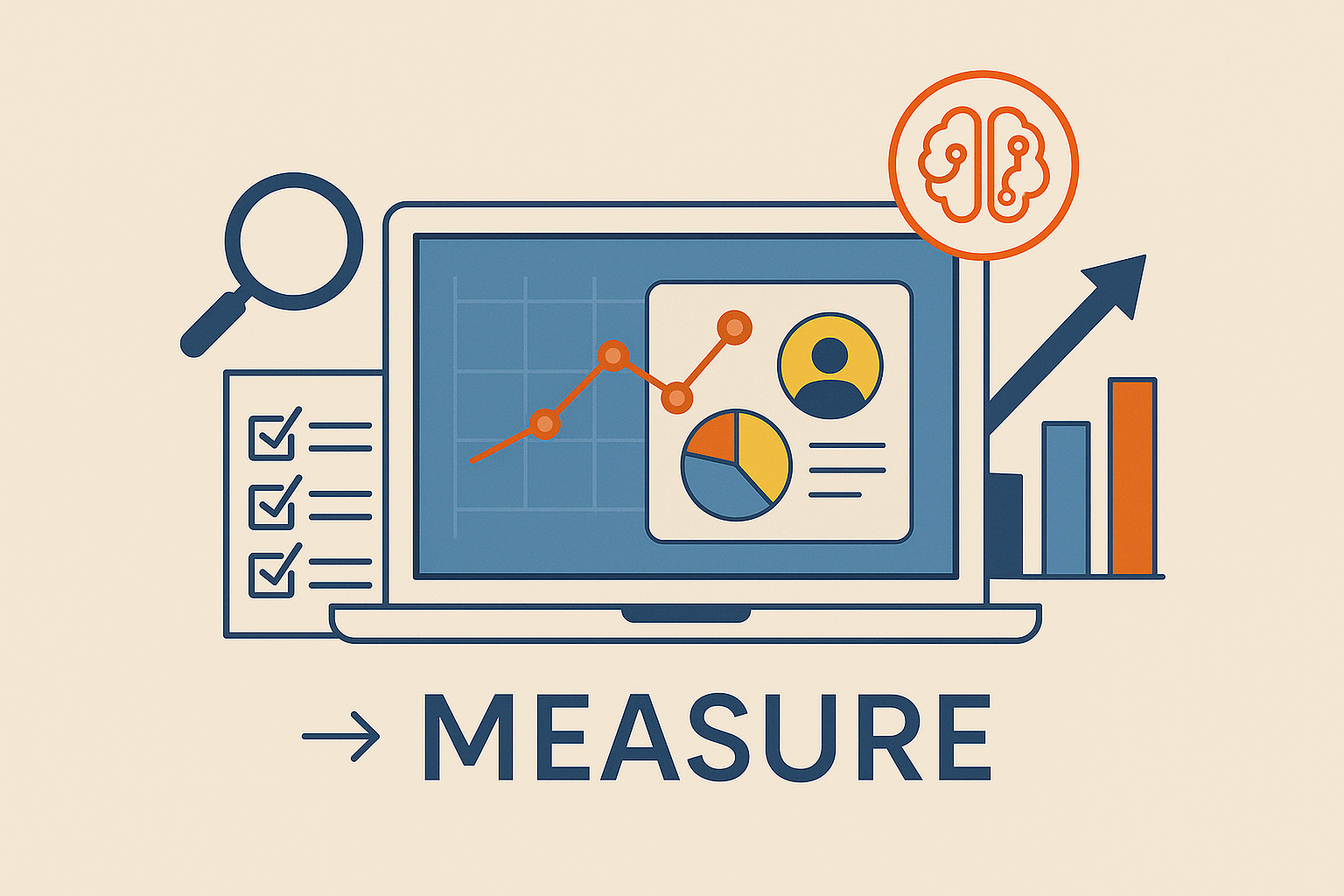
So, you've taken the plunge and started building with Artificial Intelligence in your solo venture – perhaps automating tedious tasks, generating marketing content, or even prototyping AI-powered product features. That’s a fantastic first step! But as a lean solopreneur, your resources are precious. How do you know if these AI initiatives are actually delivering value, or if they're just shiny new distractions? The answer lies in effective measurement. This is the critical second stage in the Build-Measure-Learn loop, and for AI projects, it's where you separate hype from real impact.
Beyond Vanity: Focusing on Actionable Metrics with AI
The Lean Startup methodology drills home the importance of actionable metrics over vanity metrics. Vanity metrics might look good on paper (e.g., "1,000 emails processed by AI," "50 AI images generated"), but they don't tell you if you're making real progress towards your business goals. Actionable metrics, on the other hand, are tied to specific objectives, reflect the impact of your actions, are repeatable, and genuinely inform your next steps. For solopreneurs, focusing on actionable metrics for AI projects is non-negotiable. Did that AI tool actually save you time, increase conversions, or improve customer satisfaction? AI can even help you track these crucial numbers, but you need to define what success looks like first. For instance, instead of just "total website visits" (vanity), track "conversion rate" from an AI-optimized landing page (actionable). Instead of "followers gained" from an AI-generated social campaign, measure "click-through rate to your offer" (actionable.
Actionable metrics are tied to specific objectives, reflect the impact of your actions, are repeatable, and genuinely inform your next steps.
Measuring the Success of Your AI Automations
You've built an AI automation – maybe an email sorter or a meeting scheduler – to free up your time. Now, measure its worth. Key actionable metrics include:
- Time Saved: The most direct measure. How many hours per week are you genuinely getting back?
- Reduction in Errors: If the AI is handling data entry or categorization, is it more accurate than your manual process?
- Reclaimed Cognitive Bandwidth: This is harder to quantify but incredibly important. Does automating draining tasks leave you with more mental energy for strategic, high-value work? While not a number, noting this qualitative impact is crucial.
Track these before and after implementing your AI automation MVP to see the real difference.
Gauging Your AI-Powered Content & Marketing Efforts
Generative AI can churn out content, but is it effective content? When you test AI-generated marketing materials (like ad copy, blog posts, or social media visuals), focus on:
- A/B Test Results: Compare AI-generated content against your existing methods or other AI variations. Key metrics are Click-Through Rates (CTR) and Conversion Rates (e.g., sign-ups, purchases from an ad).
- Engagement Quality: Beyond likes, are people commenting meaningfully on AI-assisted social posts? Is the bounce rate lower on AI-drafted landing pages?
- Lead Quality: If AI helps generate leads, are they converting at a good rate down the funnel?
These metrics tell you if your AI content is truly resonating and driving business outcomes.
Validating AI Personalization: Does It Move the Needle?
AI can help tailor experiences for your customers. If you've built an MVP to test personalized email campaigns or website content, measure if this extra effort pays off:
- Comparative Performance: Track email open rates, CTR, and purchase conversion rates for your personalized segments versus a generic control group.
- Customer Feedback: Are customers responding positively to the more tailored approach?
- Cohort Analysis: If possible, track the behavior of specific personalized groups over time. Do they show higher engagement or lifetime value?
The goal is to validate if personalization, even simple AI-assisted segmentation, provides a worthwhile return for your specific business.
Using AI Itself to Analyze Your Business Performance
Interestingly, AI tools can also be a core part of your "Measure" phase for general business hypotheses. For example, you might hypothesize: "Customers acquired via webinars are more engaged than those from paid ads."
Build your analysis: Identify data sources (CRM, analytics).
Measure with AI: Use AI tools (like ChatGPT's data analysis mode, Polymer, or Julius.ai) to process this data and identify actionable metrics, such as Activation Rate or Trial-to-Paid Conversion Rate per channel.
AI can quickly sift through your data to find patterns or validate these kinds of business questions much faster than manual spreadsheet wrangling.
Assessing AI Predictions: Beyond Just Accuracy
If you're experimenting with predictive AI (e.g., forecasting sales, identifying churn risk), measuring success involves two layers:
- Predictive Accuracy: How well did the model predict outcomes (e.g., using metrics like precision and recall)?
- Impact of Action: More importantly, what was the result of the actions you took based on those predictions? If your AI predicted high churn risk for certain users and you implemented a retention strategy for them, did their retention rate actually improve compared to a similar un-contacted group?
For solopreneurs, a "good enough" prediction that leads to effective action is often more valuable than a technically perfect model that's hard to act upon.
Tracking Workflow Optimization: Efficiency & Innovation Accounting
When using AI to optimize entire workflows (like client onboarding or project delivery), measure:
- Cycle Time Reduction: How much faster is the end-to-end process?
- Improved Consistency/Quality: Are there fewer errors or more consistent outputs?
- Initial ROI Indicators: Focus on time saved or increased throughput.
For early-stage AI projects where direct financial ROI is initially unclear, Innovation Accounting (a Lean Startup concept) is key. This means tracking "learning milestones" (e.g., "Validated that AI task prioritization cut proposal prep time by X%") and leading indicators of value, like user adoption of the AI-optimized process or your increased capacity for strategic work.
By diligently measuring the impact of your AI initiatives with a focus on actionable metrics, you gather the crucial validated learning needed for the next stage: deciding whether to pivot or persevere. This data-driven approach ensures your AI experiments as a solopreneur are truly moving your business forward. Stay tuned for our final post on how to "Learn & Grow" from these measurements!

No comments yet
Be the first to share your thoughts on this article!