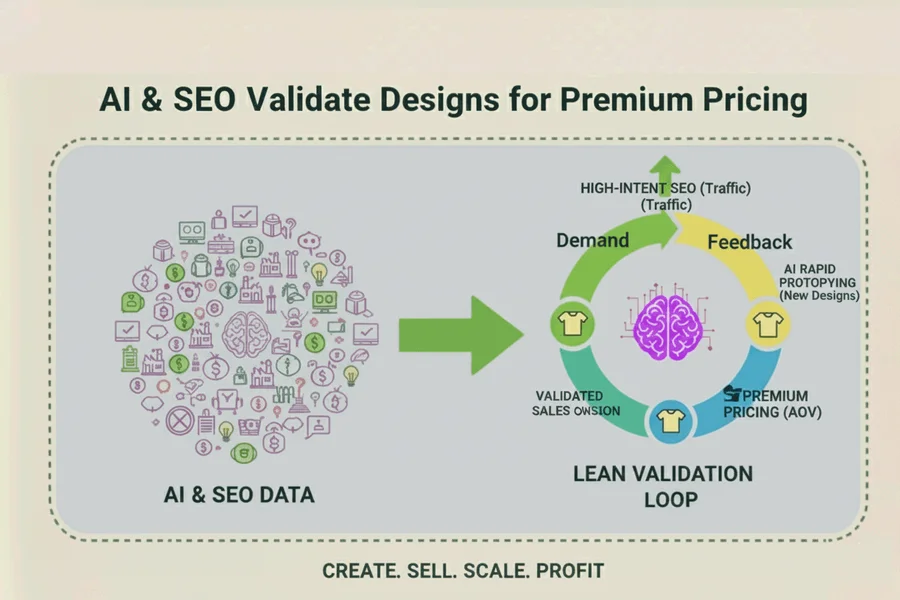
You’ve launched lean. By adopting the "Partner First" strategy, you have eliminated capital expenditure, sidestepped equipment maintenance nightmares, and outsourced inventory risk. Your focus is now purely on high-leverage activities—specifically, validating your hyper-niche product line for maximum profit.
Welcome to the MEASURE phase. In a competitive market where the average POD profit margin hovers around 20%, your goal must be to prove the value of your custom designs to justify a price point that guarantees a healthy, scalable business.
Escaping the 20% Margin Trap: The Personalization Premium
The reason the industry average margin is low is simple: commoditization. Most sellers offer generic products. Your hyper-niche approach already differentiates you, but to command a true premium, you must deliver on personalization.
This is not a gamble—it is a data-driven strategy. Research confirms that 81% of consumers are willing to pay extra for clothing and footwear that is personalized or customized. Furthermore, 76% of consumers actively prefer to buy from brands that personalize their user experiences.
The validation phase is where you collect the data to prove your design and customization options resonate, ensuring you capture this "personalization premium."
The AI-Powered Prototyping Lab
As a lean solopreneur, you cannot afford to waste time and money creating assets that fail to sell. Technology is your primary scalability lever, allowing you to ship more designs with less labor.
Rapid Concept Generation
Use generative AI as your dedicated (and free) design studio to dramatically compress the time it takes to move from an idea to a marketable asset:
- Initial Art Creation: Tools like Midjourney, Adobe Firefly, or Canva Magic Studio can rapidly generate unique design concepts, text effects, and art tailored to your hyper-niche (e.g., "minimalist travel photography quotes"). This allows you to test dozens of concepts quickly, rather than committing hours to a single design.
- Color Optimization: Never guess your palette. Specialized AI tools like Khroma or Colormind learn your design preferences and generate complementary color schemes that ensure your final apparel prints are vibrant and align perfectly with your niche aesthetic.
The Mockup Conversion Multiplier
In e-commerce, customers rely entirely on visual information to make purchase decisions. High-quality product visualization is critical for building consumer trust.
Use sophisticated AI-powered mockup generators—such as Placeit, Mockey AI, or Canva’s AI Mockup Tool—to instantly transform your design file into realistic product visuals (e.g., a hoodie worn by a model or a mug placed in a home setting).
Crucially, because your value proposition is personalization, your mockups must explicitly display the customization options. By showing placeholders for names, dates, or custom text, you visually demonstrate the premium value, which effectively reduces buyer friction and boosts conversion rates higher than generic images.
The High-Conversion SEO Strategy
Where should you focus your limited marketing effort? Data confirms that search engines remain one of the highest-converting traffic sources for POD ventures in 2025. This is because consumers arriving from search are exhibiting high-intent—they are actively looking to buy, unlike those casually browsing social media.
Audience Intent Mapping
Your strategy must be rooted in capturing this high-intent traffic:
- Target Long-Tail Keywords: Focus on specific, purchase-intent search terms (e.g., "unique personalized sustainable gifts for beekeepers") rather than generalized phrases. These long-tail terms capture consumers at the bottom of the funnel, where they are ready to transact.
- The AI SEO Automation Stack: Manual creation of product listings across multiple channels (Shopify, Etsy, etc.) is unsustainable. Integrate specialized AI writers like KoalaWriter, Surfer SEO, or Writesonic. These tools are essential for the lean founder.
This automation stack goes beyond simple keyword stuffing. Advanced systems leverage AI image recognition to analyze your design, interpret the artwork visually, and then automatically generate optimized text:
- Titles structured to capture relevant search phrases.
- Descriptions that balance creativity with essential keyword density.
- Tags that strategically mix broad and long-tail keywords for optimal ranking potential.
This passive strategy allows you to accumulate a vast, keyword-optimized digital inventory designed to capture customers continually, turning your product line into a valuable, scalable asset.
Key Performance Indicators (KPIs) for Iteration
Validation requires discipline. You must rigorously monitor data to know what to keep and what to ditch, minimizing exposure to costly, underperforming concepts.
- Design Conversion Rate (DCR): This is the ultimate test of market fit. It measures how effectively a specific design turns product views into actual sales. Designs with consistently low DCR must be retired immediately to prevent wasting marketing resources and design time.
- Average Order Value (AOV): A sustained increase in AOV is the data point that validates your premium pricing and personalization strategy. It confirms customers are willing to spend more on your hyper-specific offerings.
- Product Velocity: Highly successful POD stores add, on average, seven new products to their store monthly. Use this as a target for your AI-assisted design and SEO workflow to ensure consistent inventory growth.
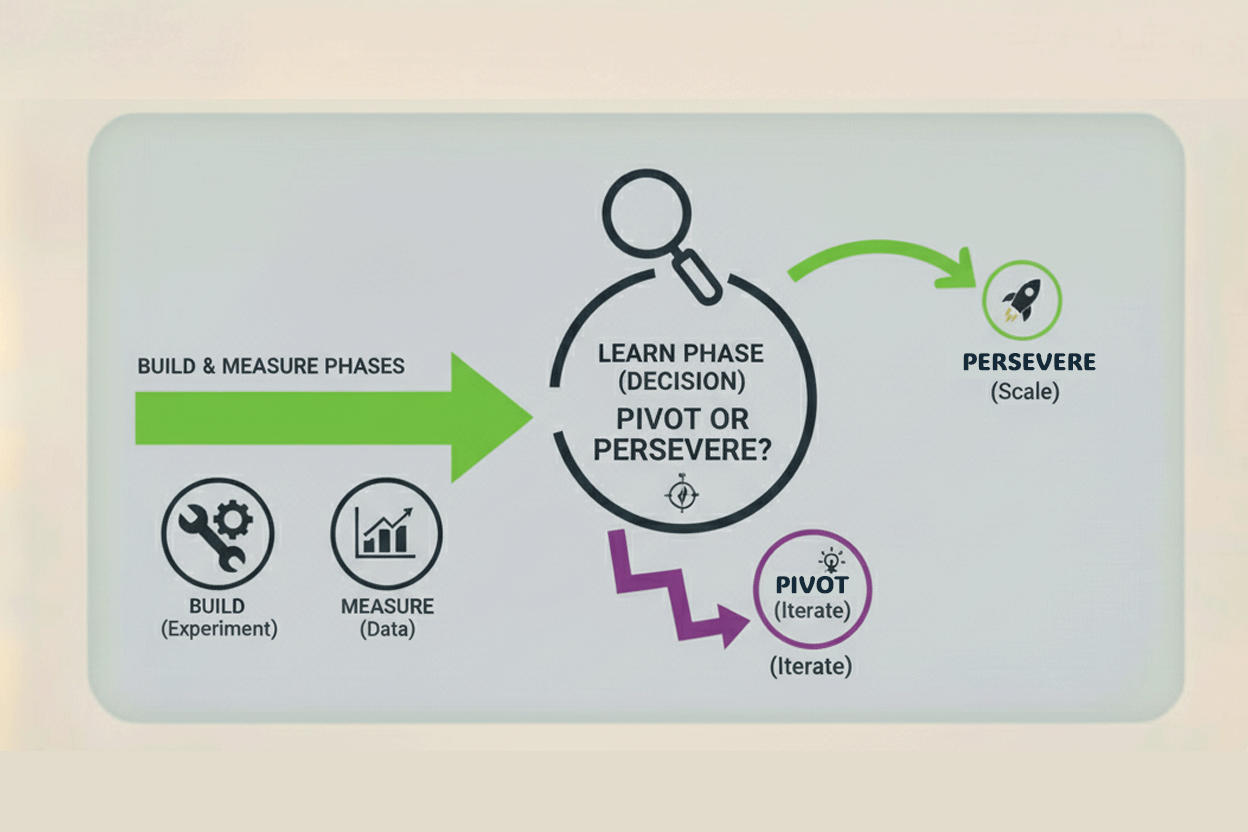
By ruthlessly measuring these metrics, you gather the intelligence needed for the final, most crucial phase: scaling your brand profitability far above the industry average.
You have proven your product sells. In the next post, we will cover the LEARN phase: shifting your business to 30%+ margins by leveraging the dual price multipliers of verifiable sustainability and strategic product diversification into high-profit accessories.



No comments yet
Be the first to share your thoughts on this article!