
You have it. That exciting idea—the one that keeps you thinking during your commute, wakes you up at 3:00 AM, and dominates your conversations with anyone who will listen. You’ve sketched it out on napkins, maybe even created a landing page or talked to a dozen potential customers. But now comes the part that separates the dreamers from the entrepreneurs: making it real.
For people starting businesses alone or in the early stages—the "solopreneurs"—this "build" phase is where the rubber meets the road. When you are using your own money and working with limited hours, you cannot afford to build the "wrong" thing. This is where the Lean Startup approach, pioneered by Eric Ries, becomes your most valuable framework. It’s not about being perfect from the start; it’s about working smart, staying focused, and delivering value fast.
💡 Key Insight: The Lean Startup approach prioritizes validated learning and rapid iteration over upfront perfection, making it ideal for resource-constrained founders.
What Exactly is a Minimum Viable Product (MVP)?
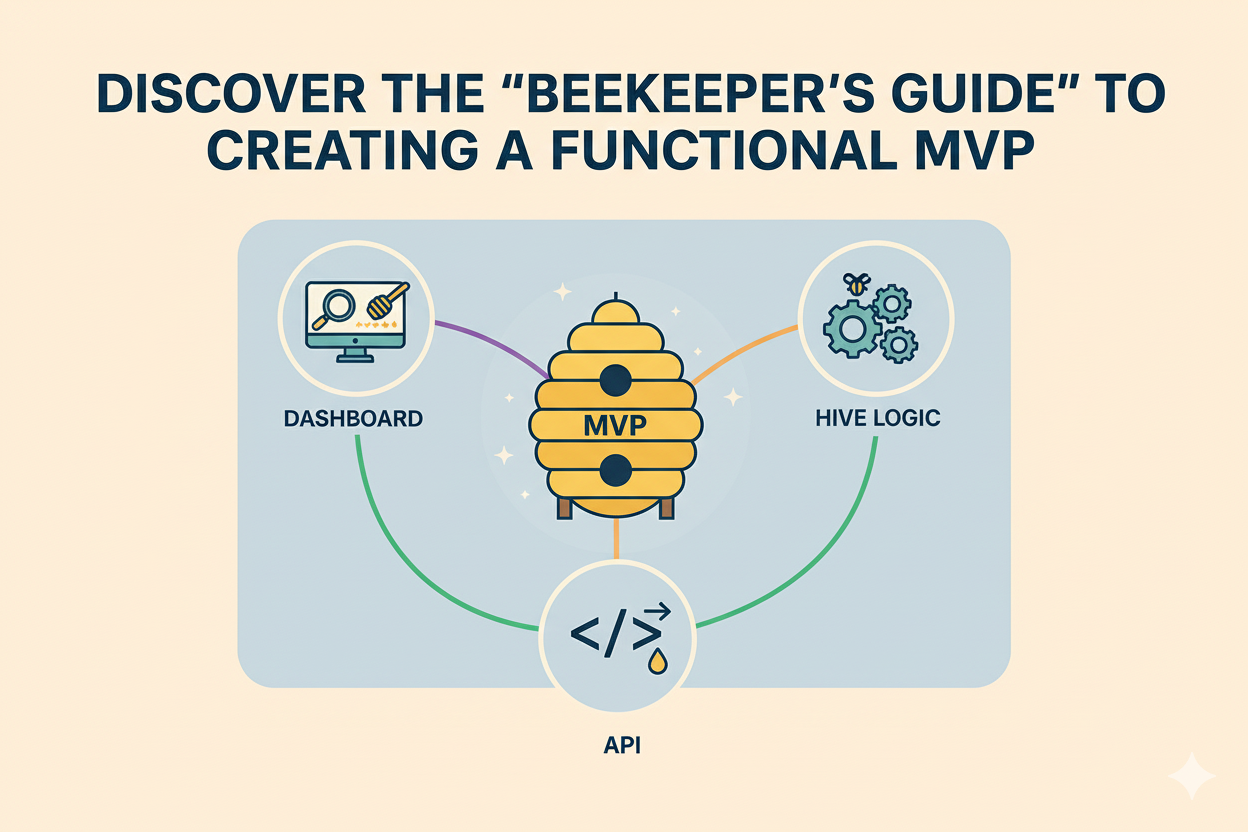
The term "MVP" is often thrown around in tech circles, but its true meaning is frequently misunderstood. An MVP is not a "lite" version of your product or a buggy prototype. It is the version of a new product which allows a team to collect the maximum amount of validated learning about customers with the least effort.
The Goal is Learning, Not Launching
The primary objective of an MVP isn't to generate massive revenue or win design awards. It is to test your fundamental business hypotheses.
- Hypothesis A: Does this problem actually exist?
- Hypothesis B: Does my solution actually solve it?
- Hypothesis C: Are people willing to pay (or give up something of value) for this solution?
The Self-Driving Car Analogy
Consider the development of a self-driving car. If you tried to build the final product immediately, you would spend ten years and billions of dollars before a single user touched it. In a Lean framework, you don't build the car; you build the components of the experience.
An MVP might be a "lane-keep assist" sensor. It’s a small, functional part of the larger vision. It provides immediate value (safety) and allows you to gather data on how drivers interact with automated steering. By testing specific parts separately, you check if the technology works and if users feel comfortable before investing in the more complicated, fully automatic systems.
Implementation: Translating Vision into Action
This is where the psychological weight of the startup journey often feels heaviest. For non-technical founders, the "Build" phase can feel like a black box. However, the process is less about code and more about logic and discipline.
Before a single line of code is written or a single No-Code element is dragged onto a canvas, you must define the "Pain Point."
- Focus on Friction: Does the current way of doing things take too much time? Does it cost too much? Does it cause emotional stress?
- Research and Observe: Don't rely on your "gut." Run surveys, but more importantly, watch people work. If you are building a tool for accountants, sit with an accountant for three hours. Look for the moments where they sigh in frustration—that is where your MVP lives.
Based on your research, identify the one feature that is absolutely required to solve the core problem. Everything else is a "Nice-to-Have."
- The "Must-Have" Test: Ask yourself: "If I launched this without Feature X, would the user still be able to solve their problem?" If the answer is yes, Feature X is not part of your MVP.
- The Power of One: Uber’s MVP was a button that called a black car to your location. It didn't have carpooling, food delivery, or advanced scheduling. It solved one problem: "I need a ride right now."
Your path depends on three variables: Skills, Budget, and Time.
- The DIY Path: If you can code, build it. But beware of the "Founder's Trap"—spending too much time polishing code instead of talking to users.
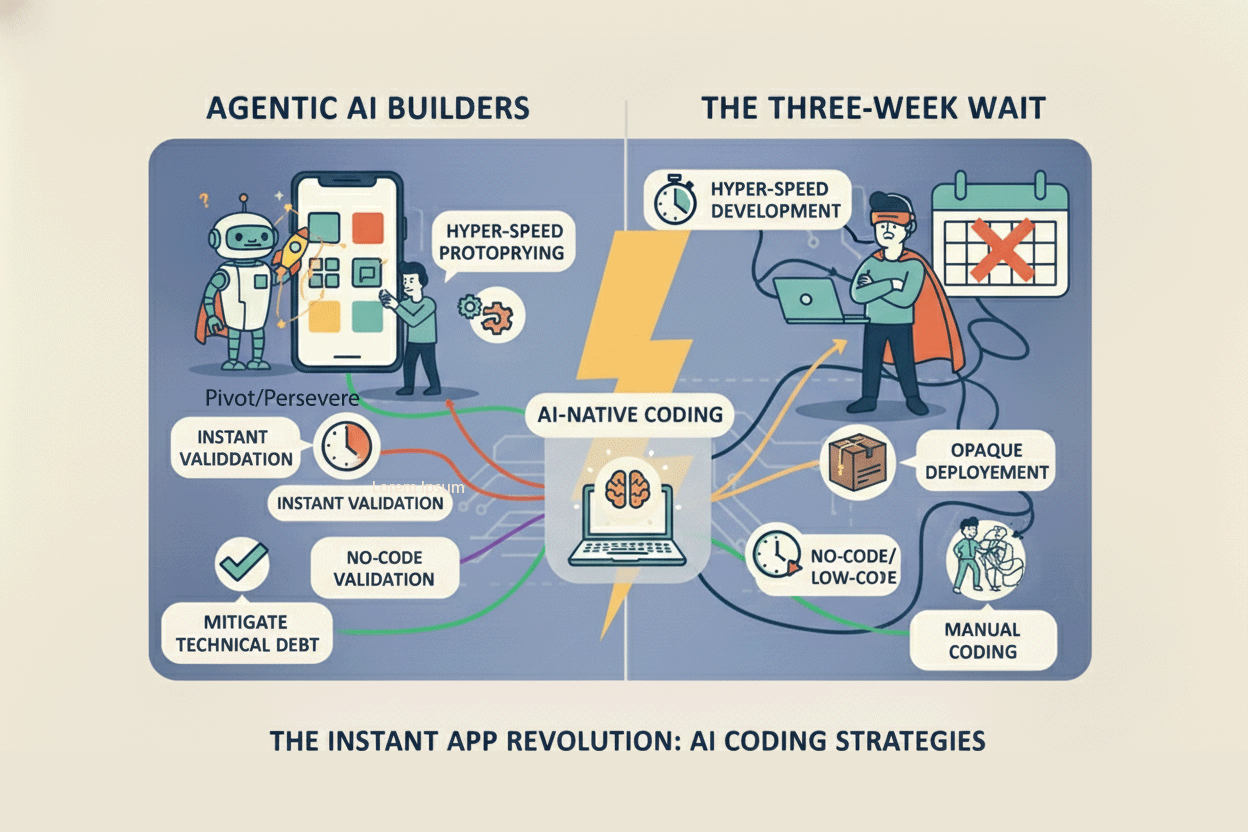
- The No-Code/Low-Code Revolution: This is the golden era for solopreneurs. Tools like Bubble, Webflow, Glide, and Zapier allow you to build complex, functional applications without traditional programming. You can build a working marketplace or a SaaS tool in a weekend for the cost of a few pizzas.
- The Outsourcing/Partnering Path: If you have the capital, you can hire a freelancer. However, for a Lean MVP, it is often better to find a "Technical Co-founder" who shares the vision and skin in the game.
Don't worry about the "Forgot Password" flow or the "Terms of Service" page on day one. Focus on the Happy Path—the shortest route from the user realizing they have a problem to your product providing the solution.
- Simplify Navigation: If it takes more than three clicks to get to the "Value Moment," your MVP is too complex.
- Remove the Friction: Every field in a sign-up form is a reason for a user to quit. Only ask for what is strictly necessary to run the test.
Technical Considerations and Best Practices
Even a "Lean" product needs a solid foundation. You don't need a skyscraper, but you do need a level plot of land.
Scalability vs. Speed
A common mistake is "Over-Engineering." Founders worry about how the app will handle a million users when they currently have zero.
- The Rule: Build for the users you have today, but don't make choices that will make it impossible to grow tomorrow.
- Database Hygiene: Choose a database structure that is standard. If you use a proprietary, obscure tool to save time today, you might spend six months migrating data next year.
Basic Security: The Non-Negotiable
"Lean" does not mean "Unsafe."
- Protect User Data: Even if you only collect email addresses, use safe connections (HTTPS).
- Trust is your Currency: Your first users are your "Early Adopters." If you lose their data, you lose your brand's reputation before it even begins.
Performance and Maintainability
Your MVP doesn't need to be the fastest site on the internet, but it cannot be frustratingly slow.
- Speed is a Feature: A slow MVP will give you "False Negatives" in your testing. You might think users don't like your idea, when in reality, they just hated the 10-second load time.
- Clean Documentation: Even if you are a solo dev, document your work. Six months from now, you won't remember why you connected Table A to Table B.
Resource Requirements and Planning
Building an MVP is an exercise in resource management. For the bootstrapped founder, your budget is usually measured in hours and hundreds of dollars, not millions.
Time: Your Most Precious Asset
Every hour spent on a "Nice-to-Have" feature is an hour stolen from customer feedback.
✅ Pro Tip: Time-Boxing: Give yourself a deadline. "The MVP will launch in 30 days, regardless of what features are finished." This forced scarcity focuses the mind on what truly matters.
Budgeting for the "Build"
- Software/SaaS Costs: Factor in the cost of your No-Code tools, domain hosting, and API fees. Many have "Free Tiers," but you should budget at least $50-$100/month to run a professional-looking test.
- The Opportunity Cost: Remember that your time has value. If you spend 200 hours building something that could have been tested with a $50 ad campaign and a landing page, you've "spent" thousands of dollars in labor.
Development Frameworks (Beyond the Code)
You don't need a project manager to use professional development methodologies. Borrowing from "Agile" and "Scrum" can keep your solo build on track.
The Power of Agile
Agile is about making progress in small cycles (Sprints). Instead of trying to build the whole app, decide what you can finish in one week.
Using Kanban Boards
Use a tool like Trello or Asana. Create three columns: To Do, In Progress, and Done.
- The Rule of Three: Never have more than three tasks in the "In Progress" column. Multi-tasking is the enemy of a fast build.
- Visual Gratification: There is a psychological boost to dragging a card into the "Done" column. For a lonely solopreneur, these small wins are essential for maintaining momentum.
Conclusion: Perfection is the Enemy of Progress
The build phase is where your entrepreneurial journey really takes off. It is the moment you stop being a person with an idea and start being a person with a business.
By focusing on building a Minimum Viable Product, you are choosing to value Facts over Opinions. You are acknowledging that you don't have all the answers yet, and that's okay. Your MVP is the question you are asking the market.
Your goal isn't to launch a perfect product; it's to start a conversation with your customers.
Don't get stuck on the color of a button or the wording of a "Welcome" email. Get your core value into the hands of a user as quickly as humanly possible.
Check-List: Is Your MVP Ready to Build?
- Have I identified the single pain point I am solving?
- Have I removed every feature that doesn't directly solve that pain?
- Have I chosen a development tool (Code or No-Code) that I can manage?
- Have I set a "Launch Date" that is less than 4 weeks away?
- Do I have a way to collect feedback once the user is done?
Are you ready to build? In the next part of this series, we will look at the "Measure" phase—how to tell if the thing you just built is actually working.

No comments yet
Be the first to share your thoughts on this article!