You have an idea. It’s a good one. You’ve told your friends over drinks, and they nodded enthusiastically. You’ve sketched it out on a napkin. You’ve even checked GoDaddy to see if the domain name is available.
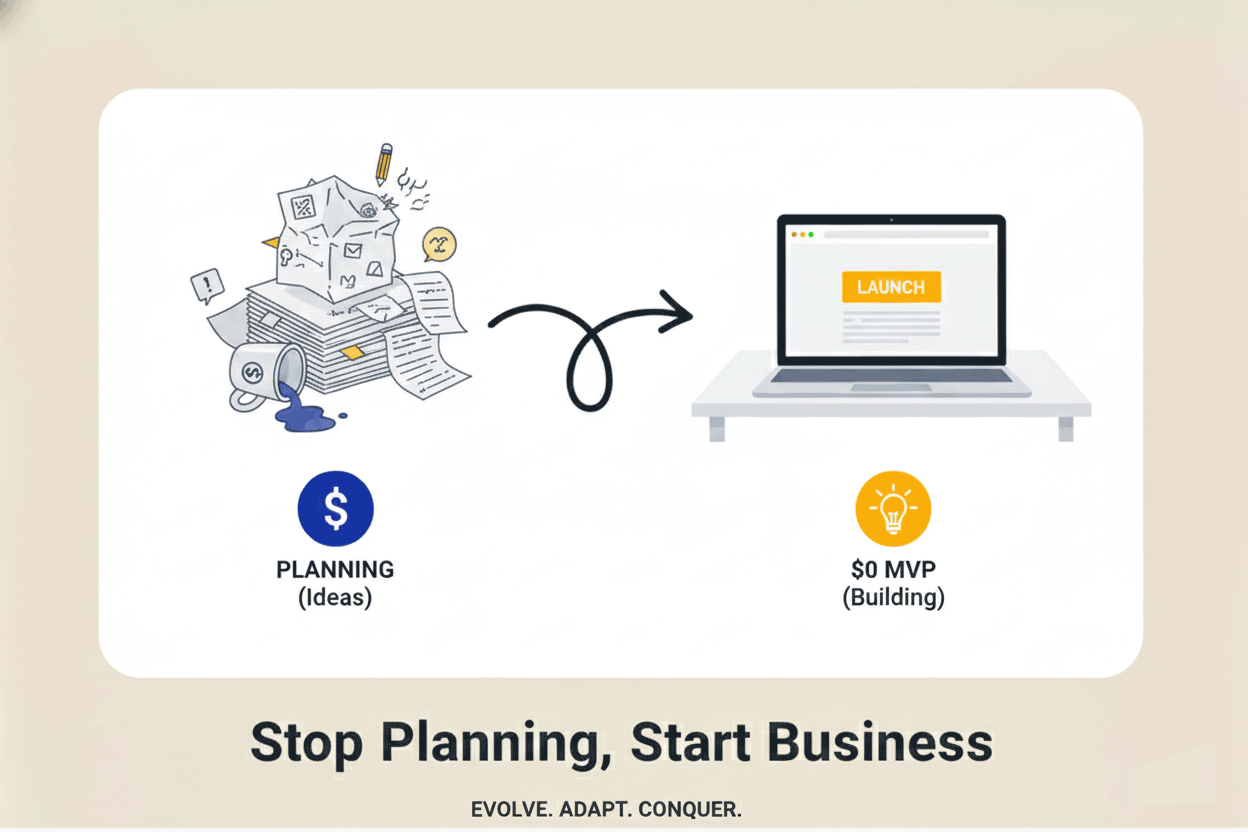
But then, the "Startup Planning Trap" kicks in.
You convince yourself that before you can sell a single thing, you need a Limited Liability Company (LLC). You need a professional logo designed by a pro. You need a custom-coded website with complex animations. You need to write a 40-page business plan to "clarify your vision."
Six months later, you have a beautiful logo, a legally registered business entity, and a lighter bank account. But you have zero customers. Zero revenue. And worst of all, you still don't know if anyone actually wants what you’re selling.
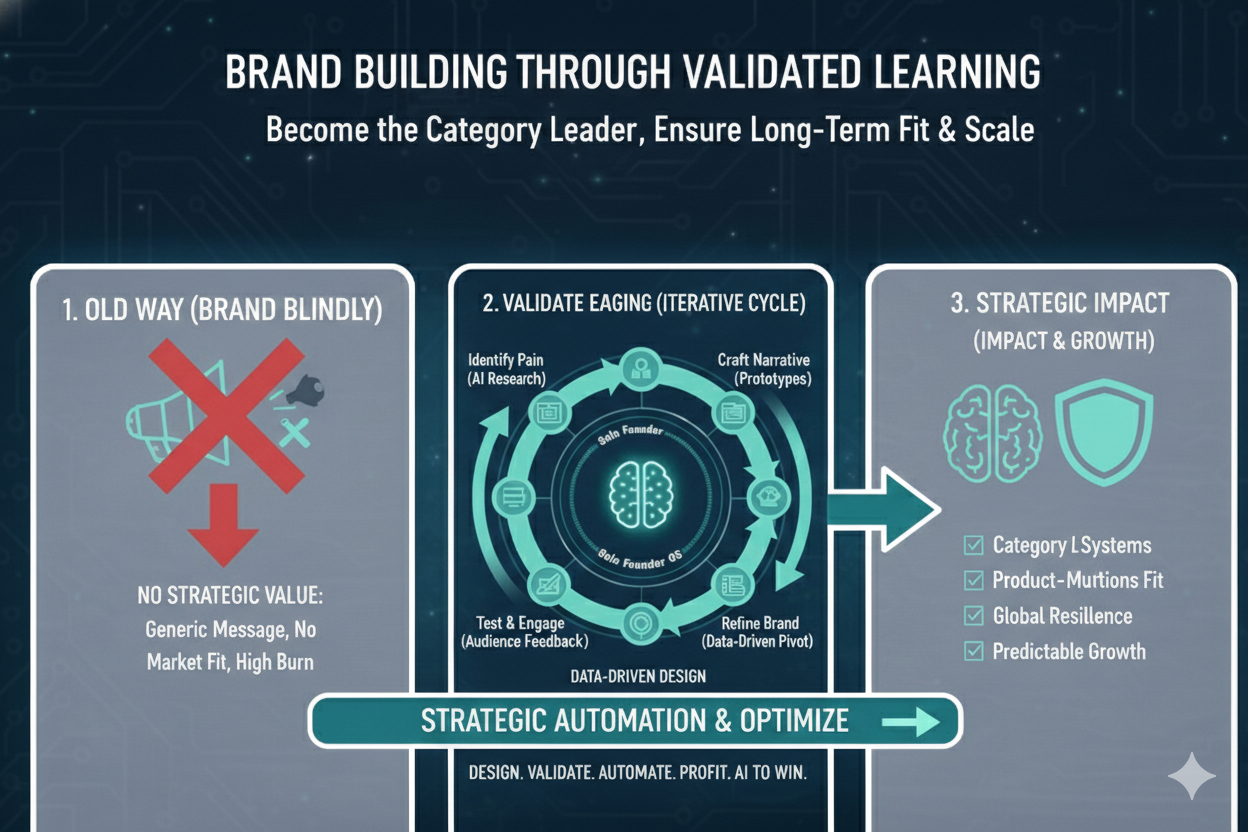
If you are a solopreneur with limited funds, this traditional path is a death sentence. It burns your most precious resource—momentum—on things that do not matter yet. The fundamental flaw here is confusing preparation with validation. True progress is only measured by validated learning derived from real market interaction.
The most dangerous trap for new entrepreneurs is "building in isolation"—spending months perfecting a product in a vacuum.
It is time to flip the script. In 2025, the barriers to entry have collapsed. You don't need funding. You don't need a tech co-founder. You need to adopt the Lean Startup philosophy condensed into the Minimum Viable Business (MVB) mindset.
Here is your blueprint to go from "Idea" to "Open for Business" in 48 hours, without spending a single dollar.
The "Zappos" Lesson: Fake It Until You Make It
To understand the MVB mindset, we have to look back at 1999. Nick Swinmurn had an idea: he wanted to sell shoes online. At the time, this was a radical concept. People wanted to try shoes on. Investors told him it would never work.
The "traditional" approach would have been to lease a warehouse, buy $100,000 worth of inventory (Nike, Adidas, etc.), hire staff, and build a complex e-commerce platform. If the idea failed, Nick would be bankrupt.
Nick didn’t do that.
Instead, he went to a local shoe store in a mall in San Francisco. He asked the owner if he could take photos of the shoes. He posted those photos on a basic, ugly website.
When a customer actually bought a pair on his site, Nick would physically walk to the mall, buy the shoes at full price, pack them up, and mail them to the customer. He lost money on every sale due to shipping and time. This is the ultimate example of a Wizard of Oz MVP.
But he wasn't trying to make a profit yet. He was trying to answer one binary question: "Will strangers pay money for shoes they haven't tried on?"
He validated the behavior before he built the business. That little experiment became Zappos, which sold to Amazon for $1.2 billion.
The Modern Solopreneur's Advantage
Nick had to walk to the mall. You just have to open a browser tab.
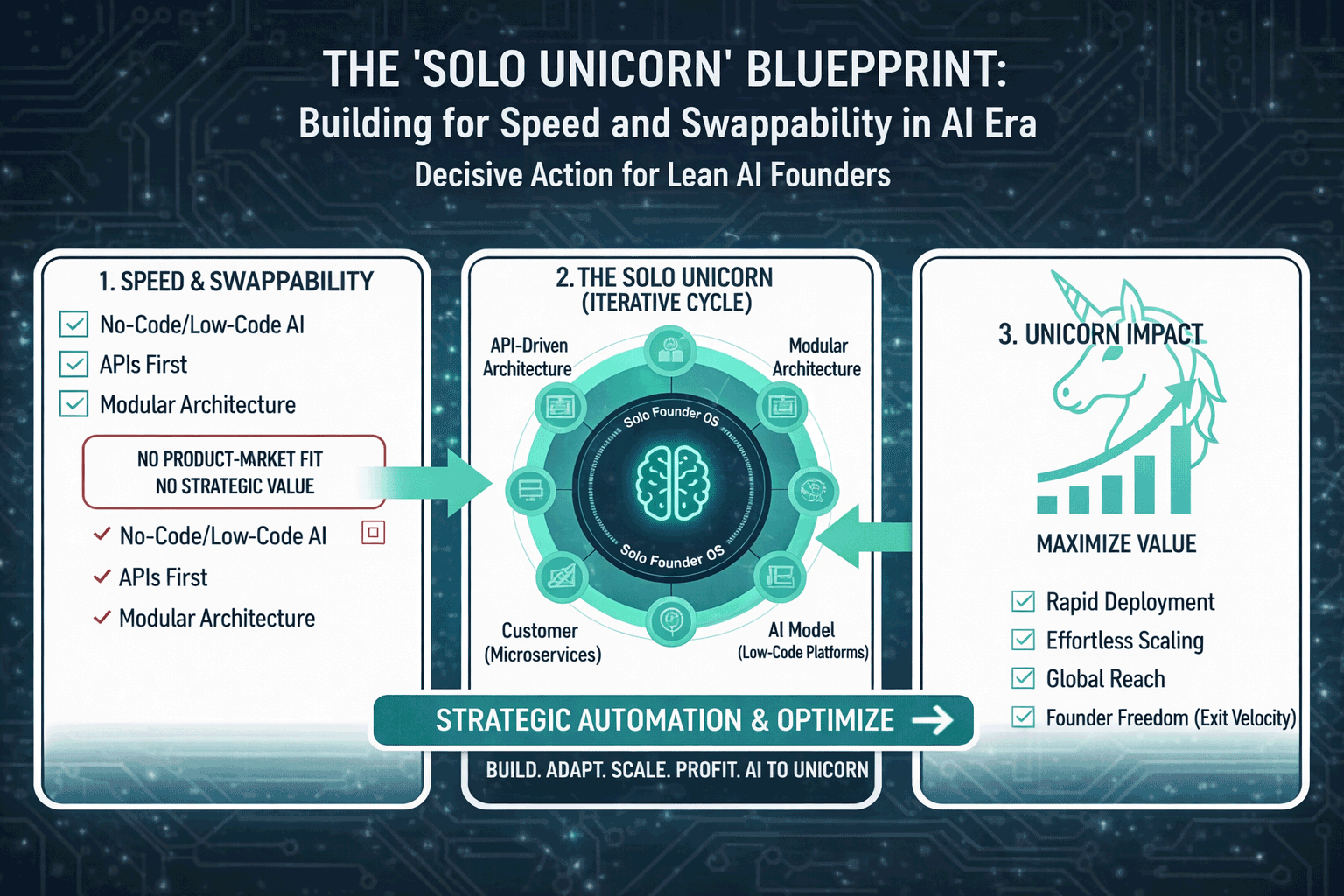
Today, we have tools that allow us to replicate the Zappos model for digital products, services, and coaching with zero friction. We can create a "storefront" that looks like a million bucks but costs us nothing but a Saturday afternoon. The MVB mindset leverages no-code/low-code tools to simulate the required functionality until user behavior is validated.
The $0 Tech Stack: Your Digital Toolkit
If you are waiting until you can afford a developer or a fancy subscription to Shopify or Kajabi, you are procrastinating. You can build a fully functional, high-converting business infrastructure using three specific free tools.
Here is the exact stack we teach in the $0 to Launch Solopreneur Course:
The Brain: Notion (Content Management)
The Problem: Traditional website builders (WordPress, Wix, Squarespace) are bloated. You spend hours fighting with drag-and-drop editors, aligning pixels, and worrying about mobile responsiveness. This violates the Lean principle of minimizing waste (Muda).
The Solution: Notion.
Most people think of Notion as a note-taking app. Solopreneurs know it is the world's easiest Content Management System (CMS).
You don't "design" in Notion; you just write. You type out your headline. You drag in an image. You write your bullet points. If you can write a Google Doc, you can build a website in Notion. The structure is clean, the typography is beautiful by default, and it forces you to focus on what you say rather than how it looks.
The Face: Super.so (The Frontend)
The Problem: A raw Notion page link looks unprofessional (notion.site/my-page-123xyz). It doesn't build trust, which reduces your conversion rate.
The Solution: Super.so.
This tool is the magic wrapper. It takes your raw Notion page and instantly turns it into a high-performance website.
- Custom Domains: It lets you use your own URL, instantly increasing brand credibility.
- SEO: It optimizes your content for Google, giving you a chance to acquire early organic traffic.
- Speed: It loads instantly, which is crucial for mobile users and SEO ranking.
- No Code: You never touch a line of HTML. You update your Notion page, and your website updates automatically, maximizing your iteration speed.
Note: Super.so has a free tier that is perfect for validation. You can upgrade later once you're making money.
The Register: Gumroad (The Checkout)
The Problem: Setting up a "Merchant Account" or Stripe integration can be intimidating. You have to worry about tax compliance, digital delivery, and security.
The Solution: Gumroad.
Gumroad is built for creators. It acts as the "Merchant of Record," meaning they handle the credit card processing, the fraud protection, and—crucially—the digital VAT taxes for different countries.
You can create a product on Gumroad in 5 minutes. Upload your PDF, set a price (or "Pay What You Want"), and get a link. When someone buys, Gumroad automatically emails them the file. You don't have to lift a finger.
The Integration: You simply take your Gumroad "Buy" button link and paste it into your Notion page. Boom. You have a fully functional e-commerce store capable of accepting payments globally, with zero security risk or setup fee.
The Psychology of "Good Enough"
The tools are easy. The psychology is hard.
The biggest reason solopreneurs fail to launch isn't a lack of tools; it's the Fear of Imperfection.
"If you are not embarrassed by the first version of your product, you've launched too late."
Let that sink in. If you launch a website that is perfectly polished, with zero typos, amazing graphics, and 50 blog posts, you spent too much time building. You assumed you knew what the customer wanted.
The Minimum Viable Business is about humility. It admits: "I think this is a good idea, but I might be wrong. Let me test it as cheaply as possible."
The "Imposter Syndrome" Trap
You might think: "But if my website isn't perfect, people will think I'm a fraud."
The truth is, customers don't care about your website design nearly as much as you do. They care about solving their problem.
- If your PDF guide saves them 10 hours of work, they don't care if the logo is a generic font.
- If your coaching call fixes their relationship, they don't care if your booking page is simple.
- If your template organizes their finances, they don't care that you built the site in Notion.
Value trumps aesthetics. Always.
The Weekend Execution Plan
Enough theory. Let's get practical. If you have a free weekend, you can launch a business. Here is the schedule, designed to maximize time-to-market (TTM):
Don't start with the product. Start with the problem. Go to Reddit, browse specific subreddits (e.g., r/freelance, r/parenting, r/fitness), and look for complaints that repeat themselves. This is Customer Discovery.
- The Pain: "I hate meal prepping; it takes too long." (The high-friction problem)
- The Pill: A "15-Minute Meal Prep Guide for Busy Dads." (Format: Simple PDF). (The simple, immediate solution)
Open a blank Notion page. Structure it using the AIDA framework—your lean marketing funnel:
- Attention: A headline that calls out the target audience ("Busy Dads: Stop Spending Sunday in the Kitchen").
- Interest: Bullet points on why the current way (takeout, 3-hour cooking) sucks.
- Desire: Show them the future (eating healthy, saving money, more time with kids).
- Action: "Get the Guide for $9." (The primary call-to-action).
Connect your Notion page to Super.so. Check the mobile view. Make sure it loads fast. You now have a working, branded URL ready for traffic.
Create the actual product. Open Google Docs or Canva. Write the 10-page guide. Do not write a 100-page book. Keep it actionable and concise. Save it as a PDF.
- Pro Tip: If you can't finish the core product in 3 hours, your scope is too big. Cut it down.
Create your Gumroad account. Create a new product. Upload your PDF. Write a short description. Get your link.
Paste the Gumroad link onto your Notion/Super website. Test the button. Buy your own product for $1 to make sure the email delivery works.
Post about it. Don't just say "I launched a thing." Tell the story of the problem.
- "I saw so many dads struggling with meal prep, so I spent the weekend writing down exactly how I do it in 15 minutes..."
Conclusion: Stop Waiting for Permission
The era of the "Gatekeeper" is over. No bank manager needs to approve your loan. No publisher needs to approve your book. No venture capitalist needs to approve your slide deck.
The only person standing between you and your first dollar is you.
You have the tools. You have the internet. You have the weekend.
Stop planning the empire. Start building the raft. Get in the water.
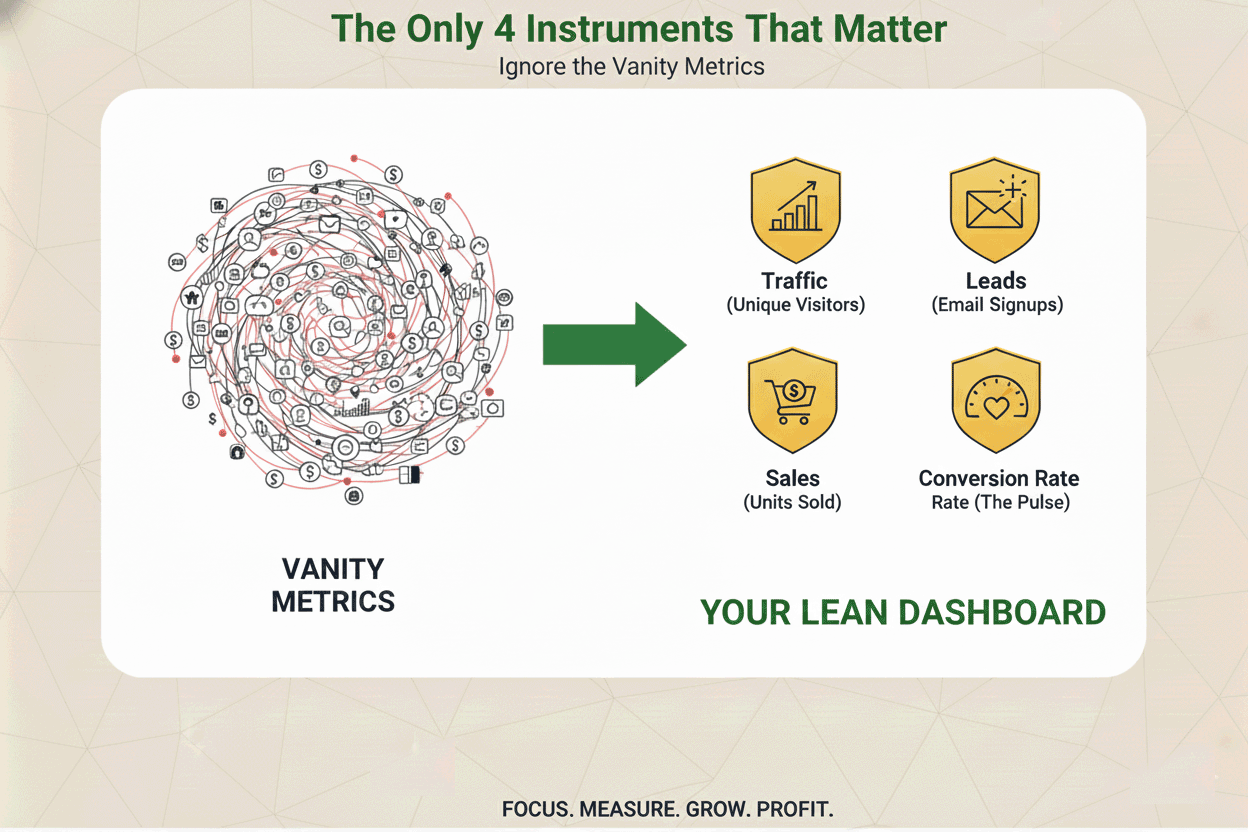
NEXT UP: You've launched, but are you making money? Check out the next phase of the Lean Loop, the Measure Phase, where we show you the four numbers that determine if your business is viable.

No comments yet
Be the first to share your thoughts on this article!