For solopreneurs and lean startups, the promise of no-code and low-code (NCLC) tools is intoxicating: the ability to build and launch a fully functional Minimum Viable Product (MVP) in weeks, not months. This unprecedented speed can feel like a superpower, turning ideas into reality at a velocity that was once impossible without a full engineering team.
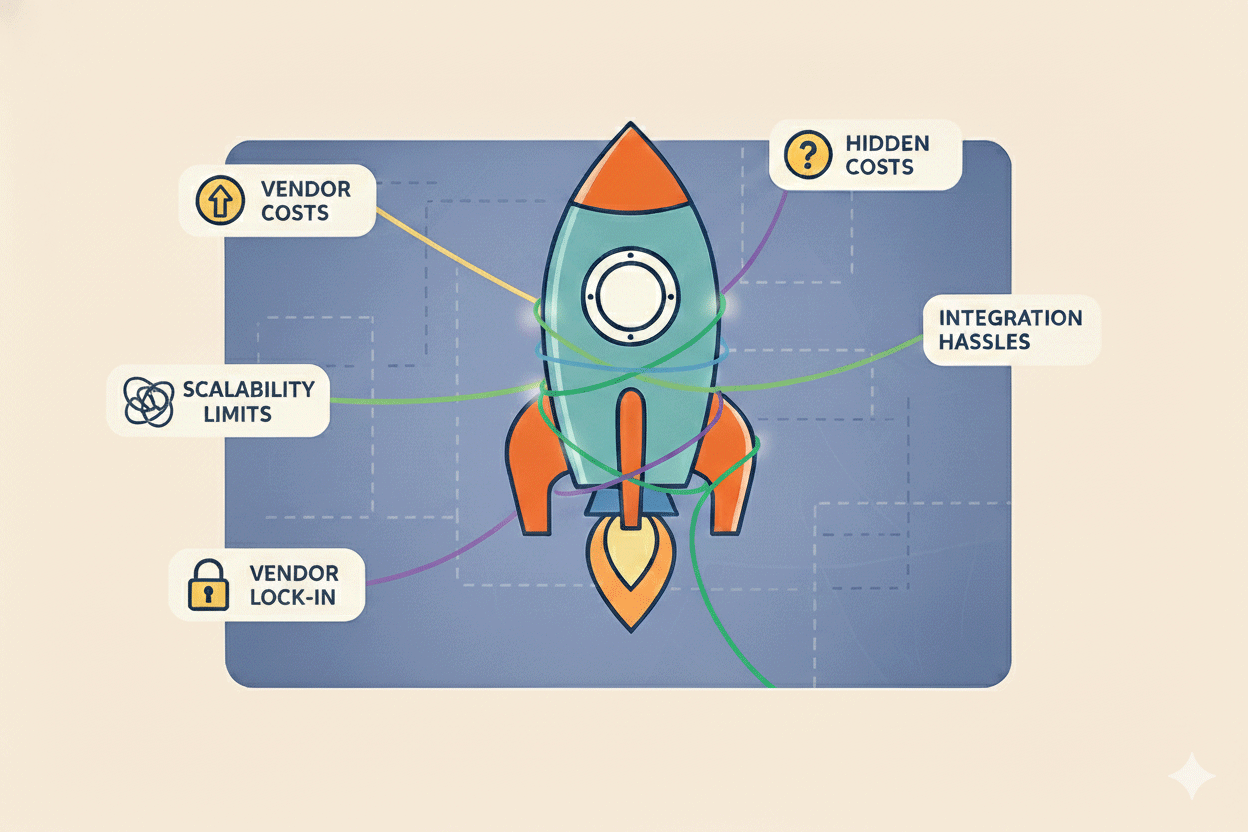
But this power is a double-edged sword. While NCLC tools offer an incredible shortcut to launch, the most obvious path is often riddled with hidden strategic traps. These traps can drain your limited capital, create crippling technical debt, and ultimately kill your momentum just as you start to gain traction. The goal isn't just to build faster; it's to build a business that can last.
This post will reveal five of the most surprising and impactful truths about the NCLC landscape. Understanding them will help you build smarter, not just faster, and architect a business that is scalable, fundable, and built for the long haul.
Takeaway 1: Your Biggest Cost Isn't Your Subscription, It's the Hidden "Rewrite Tax"
Building smarter means understanding that your true cost is measured in future liabilities, not present-day subscriptions.
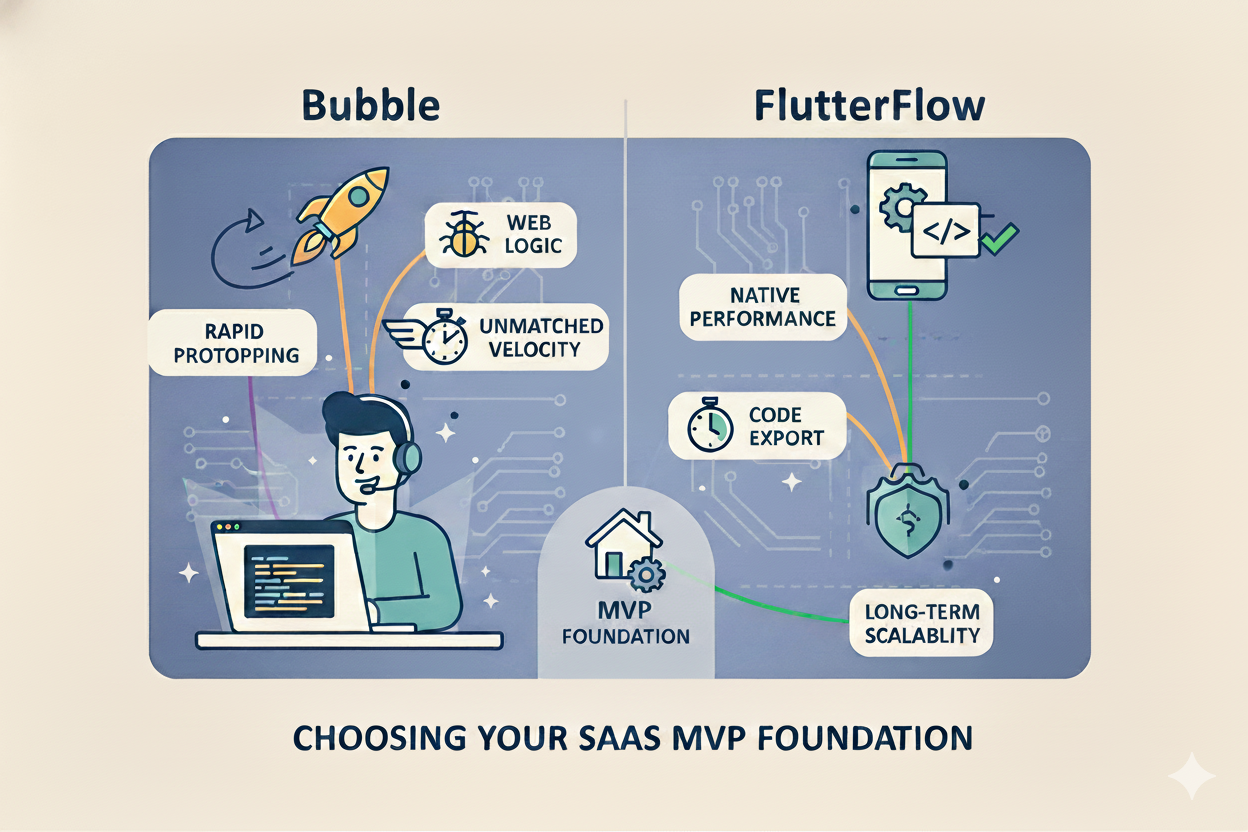
Consumption Traps: Platforms like Bubble use consumption-based pricing models built around "Workload Units" (WUs), which measure your app's computational load. While affordable at the start, costs can escalate unpredictably with success or inefficient design. A feature that works fine with 100 users can become a performance-killing, budget-draining nightmare with 10,000, forcing you to divert precious time from growth to optimization.
The AI "Rewrite Tax": The new wave of Agentic AI Builders promises an MVP for nearly free. However, this comes with an "AI Black Box" risk. The convoluted, machine-generated code can become a debugging nightmare at scale, requiring a $50,000 to $100,000 emergency rewrite just to keep the lights on.
Vendor Lock-in: The most significant hidden cost is vendor lock-in. Proprietary platforms without a code export feature hold your initial investment hostage. When you need to scale, hire engineers, or raise capital, your only option is to discard everything and start from scratch.
The investor's technical due diligence flags the proprietary codebase. They know the company will immediately need to spend 150k-250k over 9 months to rewrite the application into a standard tech stack. This cost is mentally deducted from the valuation.
The threat of a rewrite begs the question: how can you leverage speed at the very beginning without building on a fragile foundation? The answer, paradoxically, is to plan to throw your first version away.
Takeaway 2: The Fastest Way to a Scalable App Is to Throw Your First Version Away
Building smarter means separating the need for validation speed from the need for production quality.
The smartest founders employ a two-phase strategy to leverage this speed without inheriting its technical debt.
This approach separates the need for validation speed from the need for production quality. You get the best of both worlds without paying the long-term price for the AI's "black box" architecture.
But once you've rebuilt for production and start gaining traction, a new, insidious threat emerges—one that has nothing to do with your customers and everything to do with your back office.
Takeaway 3: Your Admin Panel Will Kill You Before Your Competitors Do
Building smarter means recognizing that your own time is your most valuable asset and protecting it with automation.
Muda (Waste): The manual tasks themselves are pure waste. They are non-scalable, error-prone, and kill your velocity.
Mura (Unevenness): When your operations rely on one person—you—performing undocumented manual steps, the process is inherently unstable and creates a bottleneck.
Muri (Overburden): This bottleneck leads to burnout and the most financially costly outcome: the Premature Operations Hire, an expensive salary that drains your runway.
- It’s Data Agnostic: Retool connects to virtually any data source—PostgreSQL, Firebase, Stripe, Google Sheets. This prevents operational lock-in; if you pivot your main product's tech stack, your internal tools don't break.
- It Uses Standard Code: All logic in Retool is written in standard JavaScript and SQL. This makes your internal tools transparent, easy to debug, and simple to hand off to a future engineer.
- It Saves a "Premature Operations Hire": By automating administrative tasks, you can delay or eliminate the need for an expensive operations hire, saving tens of thousands of dollars.
A smart founder doesn't build internal tools for the sake of it. You build them based on pain. The rule is simple: if you find yourself doing the same manual, multi-step task more than five times a day (like processing a specific refund type), it's time to build a one-click Retool automation for it.
Takeaway 4: The Smartest Founders Turn Their Tools Into a Revenue Stream
Building smarter means turning operational costs into financial assets.
Softr offers up to a 30% recurring commission.
Glide offers a 20% recurring commission.
If you consult, build small internal tools for other businesses, or simply recommend Glide to your network, the affiliate commissions can often cover or heavily subsidize your own subscription costs. This is financial leverage that allows the founder to divert capital from platform costs directly into high-leverage activities like marketing or customer acquisition.
Takeaway 5: The "10x Coder" Isn't a Myth; It's a Founder with an AI Partner
Building smarter means using AI as a force multiplier for your own skills, not as a replacement for them.
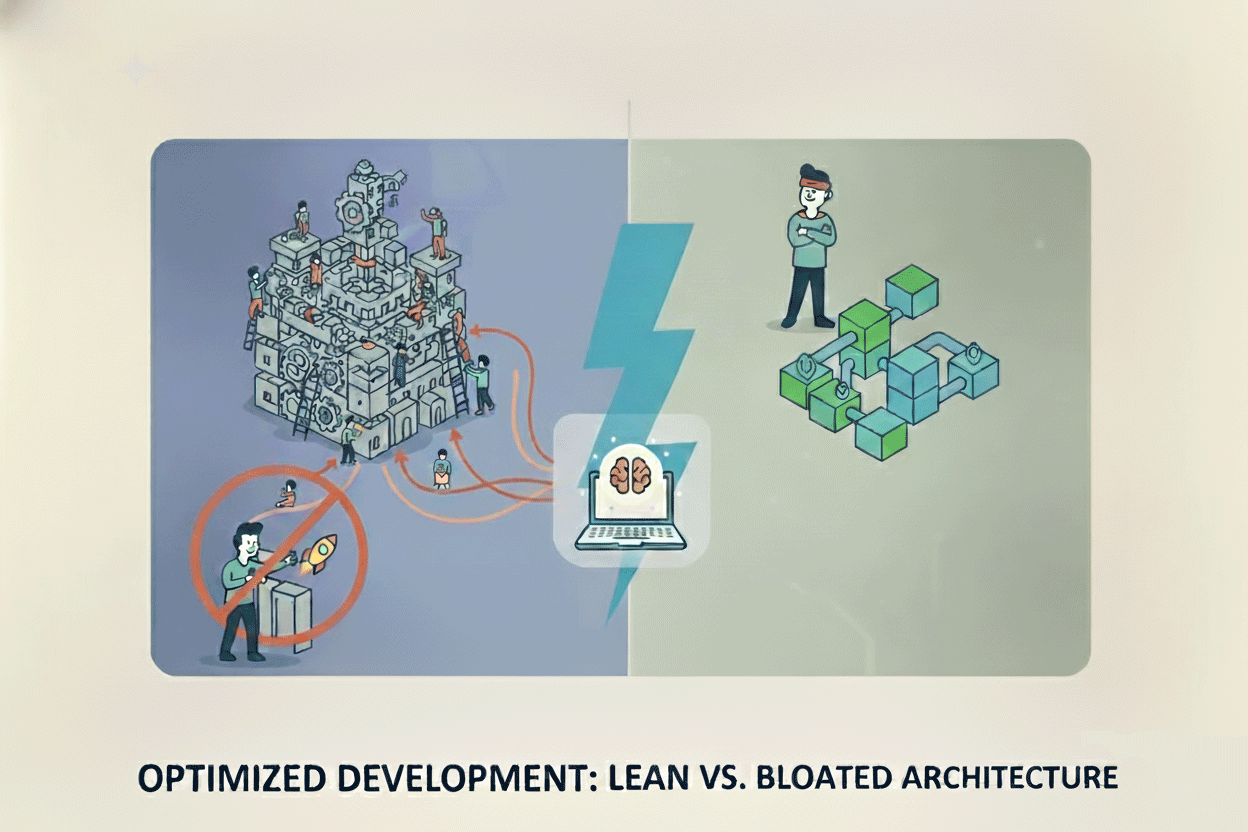
Unlike Agentic Builders that hide the code in a black box, these tools work as an intelligent partner, augmenting a developer's workflow while preserving 100% code ownership and architectural control. This is how they create a "10x Coder":
- Eliminating Context-Switching: Tools like Cursor offer "codebase comprehension." A founder can ask in plain English, "Where is the Stripe webhook logic defined?" and get an instant answer, converting 20 minutes of searching into 5 seconds of focused work.
- Automating Tedious Work: The AI can instantly write comprehensive unit tests, debug complex errors, and generate boilerplate code for API integrations, freeing the founder to focus on unique business logic.
- Preserving Code Ownership: The output is standard, clean code in a Git repository. This completely avoids vendor lock-in and creates a clean, professional codebase—a massive asset that is highly attractive to future investors and CTOs.
The strategic takeaway is this: AI-Powered IDEs don't replace developers; they create leverage, turning a single technical founder into a small, hyper-efficient engineering team.
Conclusion: Beyond Building Faster, Build Smarter
The no-code revolution has gifted founders the incredible power of speed. But speed alone doesn't build a durable business. The goal isn't just to launch fast, but to achieve sustainable velocity—the ability to iterate and grow without being crushed by hidden costs and technical debt. By understanding the strategic landscape and making deliberate choices about where to prioritize speed, control, and scalability, you can harness the true power of these tools.
Now that you understand the hidden landscape, which platform will help you not just build faster, but build a truly scalable and fundable business?

No comments yet
Be the first to share your thoughts on this article!